A brand activation campaign is not just about attracting people to a booth or event space. It is also about guiding customers through an experience that feels clear, organised, and easy to join.
When a campaign has too many things happening in one area, customers may feel confused. They may not know where to start, where to try the product, where to scan the QR code, or where to redeem a reward. This can reduce participation, slow down the campaign flow, and affect the overall customer experience.
This is why clear experience zones matter. An experienced activation agency in Singapore helps brands organise campaign spaces into practical zones so customers can move naturally from first attention to participation, product understanding, and final action.
What Are Experience Zones in Brand Activation?
Experience zones are specific areas within a campaign space, each designed for a clear purpose.
Instead of placing every activity, product display, promoter, and redemption counter in one crowded area, the campaign is divided into simple sections. Each section helps customers understand what to do at that stage of the experience.
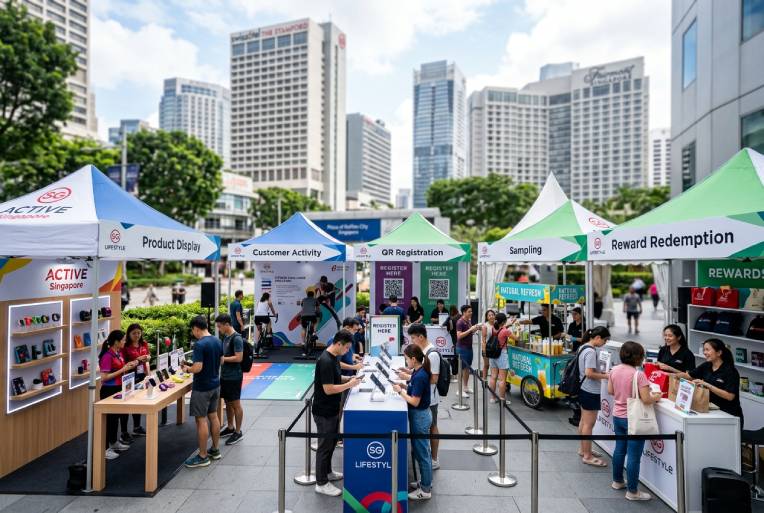
For example, a campaign may include a product display zone, sampling zone, activity zone, QR registration zone, consultation zone, and reward redemption zone.
The goal is not to make the setup complicated. The goal is to make the customer journey easier to follow.
When each zone has a clear role, customers can understand the campaign faster and participate with less hesitation.
Clear Zones Help Customers Know Where to Start
One of the biggest challenges in live campaigns is helping customers take the first step.
If the activation space looks busy but unclear, customers may pause briefly and then walk away. They may feel unsure whether they are allowed to enter, where they should stand, or who they should speak to.
A clear entry zone solves this problem.
Entry Zone
The entry zone is where customers first notice and approach the campaign. It may include the main signage, a promoter greeting, product display, or a simple invitation such as “Try a Free Sample” or “Scan to Redeem.”
This area should feel open and welcoming. It should not be blocked by counters, storage items, or too many staff members.
A good entry zone helps customers feel comfortable enough to come closer.
Product Display Zones Improve Understanding
Product displays should do more than decorate the event space. They should help customers understand what the brand is promoting.
A product display zone allows customers to see the product clearly before or during the interaction. This is especially useful for product launches, sampling campaigns, retail activations, and roadshows.
The display should highlight the product, one key message, and the main customer benefit. If there are different product types, they should be arranged in a way that is easy to compare.
When the product display zone is clear, promoters can use it to support their explanation. Customers can also browse briefly before deciding whether they want to ask questions or join the activity.
Activity Zones Make Participation More Organised
Interactive activities are often used to encourage customer participation. This may include games, quizzes, demonstrations, sampling, spin-and-win mechanics, photo moments, or hands-on product trials.
However, if the activity area is not clearly separated, the campaign can feel messy. Customers may stand in the wrong place, block the display, or interrupt the registration flow.
Activity Zone
The activity zone should be easy to identify. Customers should know where the activity begins, how to join, and what happens after completing it.
Clear signage and promoter guidance can help. If the activity has several steps, the flow should be simple enough for customers to follow without a long explanation.
An organised activity zone helps keep participation smooth and makes the campaign feel more professional.
QR and Registration Zones Reduce Confusion
Many brand activation campaigns now include QR codes, digital forms, app downloads, e-vouchers, surveys, or online registrations.
These digital actions should be placed in a clear zone instead of being hidden or added randomly.
QR Registration Zone
A QR registration zone gives customers a proper place to scan, fill in details, and receive confirmation. It should be positioned where customers are ready to take action, not too early or too late in the journey.
For example, if customers need to scan before receiving a sample, the QR zone should be placed before the sampling counter. If they scan after completing a game, the QR zone should be placed near the activity exit.
The digital step should also be fast and easy. A clear zone will not help if the form is too long or the page is difficult to use.
Sampling and Trial Zones Help Customers Focus
Product trials are more effective when customers have enough space and time to experience the product.
For food and beverage campaigns, customers may need a clean and organised sampling counter. For beauty or skincare activations, they may need a proper demonstration area. For technology products, they may need a testing station where promoters can explain the product clearly.
A dedicated sampling or trial zone helps customers focus on the product instead of feeling rushed or distracted.
It also helps the event team manage stock, hygiene, product handling, and customer questions more effectively.
Consultation Zones Support Deeper Engagement
Not every customer will need a long conversation, but some will want more information before taking action.
A consultation zone is useful for campaigns that involve higher-value products, service enquiries, subscriptions, product recommendations, or personalised advice.
This area can be simple. It may be a small counter, seated corner, or promoter-led discussion space. The purpose is to give interested customers a place to ask questions without blocking the main activity flow.
By separating quick participation from deeper engagement, the campaign can serve both casual visitors and serious prospects more effectively.
Reward Redemption Zones Create a Clear Ending
A campaign should not only have a clear beginning. It should also have a clear ending.
Customers should know where to collect their gift, sample, voucher, or redemption item after completing the required step.
If the reward process is unclear, customers may crowd around promoters or return to the wrong counter. This can slow down the campaign and affect the experience for new visitors.
A dedicated reward redemption zone gives customers a smooth final step. It also allows promoters to remind them of the next action, such as using a voucher, visiting a store, following the brand, or checking their email for a follow-up offer.
Experience Zones Improve Customer Flow
Clear experience zones help customers move through the campaign in a more natural order.
A simple flow may look like this: notice the campaign, enter the space, view the product, join the activity, scan a QR code, receive a reward, and leave with a clear next step.
This flow helps reduce confusion and prevents customers from gathering in one crowded area. It also helps promoters manage visitors more efficiently because each zone has a clear role.
For busy Singapore event locations, this is especially important. Roadshows, retail campaigns, and mall activations often need to handle many customers within limited space.
Experience Zones Help Promoters Work Better
Promoters perform better when the campaign space is organised.
If each zone has a clear purpose, promoters know where to stand, what to explain, and how to guide customers to the next step. This makes communication more consistent across the team.
For example, one promoter may focus on attracting customers at the entry zone, another may explain the product at the display zone, and another may help with QR registration or reward redemption.
This does not mean every campaign needs a large team. Even with a small team, clear zones help promoters manage the customer journey more smoothly.
Why the Right Activation Agency Matters
Planning experience zones requires more than arranging furniture or counters.
A reliable activation agency in Singapore considers the campaign objective, customer behaviour, space size, traffic direction, product type, promoter roles, digital journey, queue management, and final call-to-action.
The agency helps decide which zones are needed and how they should connect. For some campaigns, the zones may be simple and compact. For larger campaigns, the zones may be more detailed.
The important thing is that every area should support the customer journey and campaign goal.
Conclusion
Brand activation campaigns need clear experience zones because customers should not feel confused about where to start, what to do, or where to go next.
Well-planned zones help improve customer flow, product understanding, activity participation, QR registration, sampling, consultation, and reward redemption. They also make it easier for promoters to guide customers and maintain a professional campaign experience.
An experienced activation agency in Singapore helps brands design activation spaces that are not only attractive, but also practical and easy for customers to navigate.
When the campaign space is clear, customers are more likely to join, engage, remember the brand, and take meaningful action after the experience.