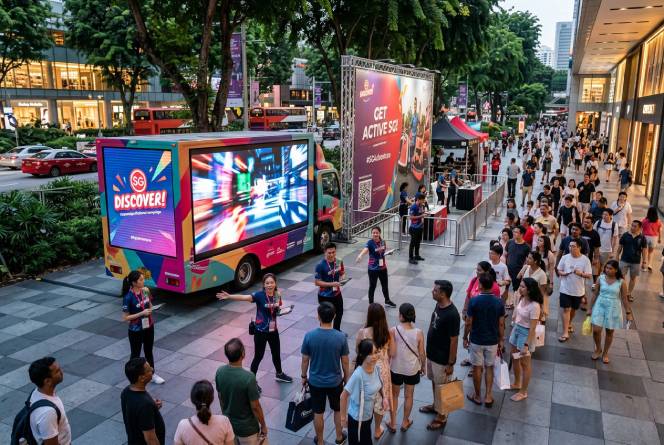
A busy event campaign can look successful from the outside. Customers are visiting the booth, promoters are interacting with visitors, and activities are attracting participation. However, does a large crowd necessarily mean the campaign has achieved its goals?
Not always.
While visitor numbers and overall participation are useful indicators, they do not provide a complete picture of campaign performance. A campaign may attract hundreds of visitors but generate limited product interest, while another may reach fewer people yet produce more relevant enquiries.
This is why an experienced event agency in Singapore looks beyond surface-level numbers. Measuring the right event campaign results helps brands understand what worked, what customers valued, and how future campaigns can improve.
Why Event Campaign Measurement Matters
Event marketing involves time, budget, manpower, planning, and operational resources. Brands need to understand whether these investments are supporting their business objectives.
Event campaign measurement is the process of evaluating campaign performance against specific objectives using relevant data and customer insights.
For example, a product launch may focus on awareness and product discovery, while a sales-driven roadshow may prioritise qualified enquiries or voucher redemptions.
Without clear measurement, brands may judge success based mainly on how busy or attractive the event appeared.
A proper performance review helps identify meaningful outcomes rather than relying only on impressions.
Start with the Campaign Objective, Not the Numbers
Before selecting performance indicators, brands should identify what the campaign is trying to achieve.
Different campaign objectives require different measurements. A brand awareness campaign should not be evaluated in exactly the same way as a lead-generation event.
For example:
- Brand awareness: Estimated reach, brand recognition, and message recall.
- Product discovery: Demonstrations completed, product trials, and customer feedback.
- Lead generation: Qualified enquiries, completed registrations, and follow-up interest.
- Sales promotion: Voucher redemptions, attributable purchases, and conversion rates.
The most useful indicators are those connected directly to the campaign objective.
Measuring more numbers does not necessarily mean measuring more effectively.
Visitor Numbers Do Not Tell the Whole Story
Visitor numbers are among the most common event metrics.
They help brands understand how many people approached or participated in the campaign. However, a high visitor count does not automatically indicate strong customer interest.
For example, a giveaway activity may attract a large crowd, but many visitors may have little interest in the product itself.
On the other hand, a smaller product demonstration may attract customers who ask detailed questions and show genuine purchase interest.
This is why brands should consider both visitor volume and audience quality.
The right audience can be more valuable than the biggest crowd, depending on the campaign objective.
Measure the Quality of Customer Engagement
Customer engagement is another important part of campaign evaluation.
However, not every interaction provides the same value.
A customer who briefly collects a sample may have a different level of interest from someone who participates in a demonstration, asks questions, and requests more information.
Brands can evaluate engagement by examining how customers interact with the campaign.
Participation Quality
Did customers complete the intended activity, or did they leave before finishing?
Product Interest
Did visitors ask about product benefits, availability, pricing, or usage?
Meaningful Conversations
Did promoters have opportunities to address customer questions and explain the product clearly?
These observations help brands understand whether the activation created genuine interest or mainly attracted temporary attention.
Look at Qualified Leads Instead of Total Registrations
For campaigns focused on lead generation, the number of registrations is important, but lead quality matters too.
A campaign may collect many contact details, yet not every registration represents a potential customer.
Qualified leads are enquiries that meet relevant criteria based on the brand’s target audience, product offering, or intended customer needs.
For example, a business service campaign may value enquiries from relevant decision-makers, while a consumer product campaign may focus on people who express interest in purchasing.
An event agency in Singapore can help brands establish suitable lead qualification criteria before the campaign starts.
This makes post-event reporting more useful and helps sales teams prioritise follow-up efforts.
Track Product Trials and Customer Responses
Product sampling and demonstrations allow customers to experience a product directly.
Instead of measuring only how many samples were distributed, brands can also evaluate how customers responded.
Were customers interested in trying additional products? Did they ask where to purchase? Were there common concerns about pricing, features, or suitability?
These responses provide valuable context behind the participation numbers.
For example, if customers repeatedly ask the same question, the brand may need to improve its product explanation or campaign message.
Customer feedback can help brands make better marketing decisions beyond the event itself.
Understand Conversion Rates and Customer Actions
A conversion happens when a customer completes a defined campaign goal.
Depending on the event, this could mean submitting an enquiry, registering for a consultation, redeeming a voucher, purchasing a product, or completing another intended action.
One useful metric is the conversion rate.
Conversion Rate = (Number of Completed Actions ÷ Number of Eligible Participants) × 100%
For example, if 200 eligible participants join a campaign and 40 complete the intended action, the conversion rate is 20%.
This helps brands evaluate whether the campaign successfully guides customers toward the desired outcome.
However, the definition of a conversion should remain consistent throughout the reporting period.
Digital Touchpoints Provide Additional Insights
Digital touchpoints can make certain campaign activities easier to track.
QR codes, online forms, digital vouchers, landing pages, and registration systems can provide data about customer actions.
For example, brands may track how many people scanned a QR code, completed a form, redeemed a voucher, or visited a campaign landing page.
However, these numbers should be interpreted carefully.
A QR scan does not always mean the customer completed registration. Likewise, a page visit does not automatically represent a qualified enquiry.
The goal is to understand how customers move through the digital customer journey, including where they may stop before completing an action.
Compare Results Across Locations and Time Periods
Campaign performance may vary depending on location, timing, and audience behaviour.
A roadshow in a shopping mall may attract a different customer profile from an activation in a business district. Weekday and weekend participation may also differ.
Rather than looking only at the overall campaign total, brands can review performance across different locations and time periods.
This may reveal which locations generated more relevant enquiries, which activities encouraged participation, or when additional manpower was most useful.
Comparisons should account for differences in operating hours, visitor traffic, campaign setup, and other conditions.
These insights can support better planning for future roadshows and mobile event spaces.
Include Operational Performance in the Review
Customer engagement and conversions are important, but operational performance also affects campaign success.
For example, a campaign may generate strong interest but experience long waiting times, stock shortages, or technical issues that prevent customers from participating.
A complete post-campaign review should consider promoter performance, queue management, activity completion, equipment reliability, and customer feedback.
These observations help identify whether operational challenges affected the results.
Good event execution creates the conditions for meaningful customer engagement, so operational insights should not be overlooked.
Avoid Measuring Everything Without a Clear Purpose
Event campaigns can produce many different types of data.
However, collecting every available metric may make reporting unnecessarily complicated.
Brands should focus on a manageable set of key performance indicators that directly relate to their objectives.
For example, a campaign focused on product discovery may prioritise product trials, meaningful conversations, customer feedback, and purchase interest.
A campaign designed for lead generation may place greater emphasis on qualified registrations, conversion rates, and follow-up outcomes.
Useful reporting explains what the numbers mean and how they support better decisions.
How the Right Event Agency Supports Campaign Measurement
A reliable event agency in Singapore helps brands connect campaign planning with performance evaluation.
This begins by identifying the campaign objective and selecting relevant indicators before the event starts.
During execution, the agency can coordinate promoter reporting, customer participation records, activity tracking, and operational observations.
After the event, these findings can be reviewed to understand what worked and what may need improvement.
Whether the campaign involves retail activations, product launches, roadshows, sampling campaigns, or interactive brand experiences, meaningful measurement helps brands make better use of their marketing resources.
Conclusion
A successful event campaign should not be judged only by crowd size, attractive visuals, or the number of activities completed.
Brands should measure results that connect directly to their objectives, including audience quality, customer engagement, product trials, qualified leads, conversion rates, and operational performance.
An experienced event agency in Singapore can help brands identify these indicators and understand how campaign activities contribute to meaningful business outcomes.
When brands measure what truly matters, event reporting becomes more than a summary of numbers. It becomes a valuable tool for improving future campaigns and making smarter marketing decisions.