Attracting people to an event space is only the first step. The real challenge is encouraging them to stop, participate, and spend enough time with the brand to understand its message.
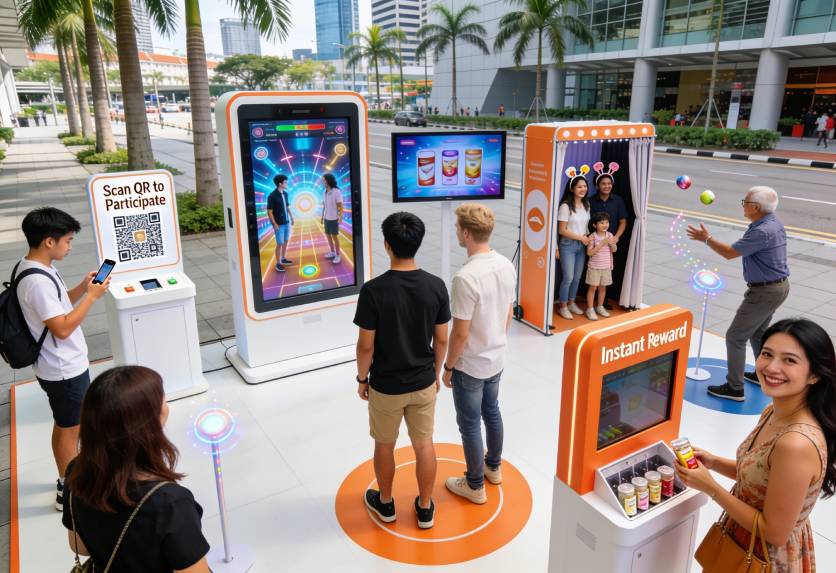
Interactive technology can help turn a passive event display into an experience that invites customers to take part. Instead of simply looking at a booth or receiving a flyer, visitors can play a digital game, answer questions, scan a QR code, create content, explore a product, or receive an instant reward.
An experienced event agency in Singapore can combine these tools with campaign strategy, physical design, and promoter engagement. When used properly, interactive technology makes participation more enjoyable while helping the brand achieve practical goals such as increasing awareness, collecting leads, encouraging product trials, or gathering customer feedback.
Why Audience Participation Matters in Live Campaigns
A live campaign gives brands an opportunity to interact with customers directly. However, physical presence alone does not guarantee meaningful engagement.
Visitors may walk past an attractive setup if they do not understand what they are expected to do. Others may notice the campaign but avoid joining because the activity appears complicated, time-consuming, or unrewarding.
Interactive technology helps provide a clear reason to participate. It can make the experience easier to understand, create curiosity, and offer customers an immediate response to their actions.
Depending on the campaign, audience participation may involve:
- Trying a product
- Completing a digital challenge
- Scanning a QR code
- Answering a short survey
- Registering for a reward
- Taking a branded photo
- Exploring an interactive display
- Sharing campaign content online
The technology should support the campaign objective rather than being included only because it looks modern.
Interactive Technology Turns Visitors into Active Participants
Traditional event displays often communicate in one direction. The brand presents information while the customer observes it.
Interactive experiences create two-way participation. Visitors make choices, provide responses, complete activities, or influence what happens on the screen. This gives them a more active role in the campaign.
For example, instead of placing product information on a static panel, a brand could allow visitors to select their needs on a touchscreen and receive a personalised product recommendation. A campaign could also turn product knowledge into a short digital quiz with instant rewards.
The more involved customers become, the more opportunities the event team has to begin a conversation and explain the brand naturally.
Digital Games Make Brand Engagement More Enjoyable
Digital games are commonly used to attract attention and create a simple point of interaction.
The game does not need to be complicated. A short challenge that takes less than a minute may work better in busy locations where visitors have limited time.
Possible formats include:
- Spin-and-win activities
- Memory matching games
- Product knowledge quizzes
- Reaction-time challenges
- Digital puzzles
- Lucky draws
- Catch-and-collect games
- Leaderboard competitions
The game should connect with the brand or campaign message. A food brand may create a game around ingredients, while a financial brand could develop a simple challenge based on savings habits.
Rewards can also be linked to participation. Visitors may receive a sample, voucher, promotional gift, or entry into a larger draw after completing the activity.
QR Activities Create a Simple Bridge Between Physical and Digital Engagement
QR codes are useful because customers can join an activity using their own phones without needing additional equipment.
An event agency may use QR codes to direct visitors to:
- Campaign registration forms
- Product information
- Digital games
- Surveys
- App download pages
- Promotional offers
- Social media pages
- Membership sign-ups
- Reward redemption forms
The QR activity should be easy to complete. Long forms, unclear instructions, or too many steps can reduce participation.
A good campaign makes the benefit clear before asking customers to scan. For example, the event team may explain that scanning the code allows the visitor to play a game, receive a sample, unlock a promotion, or join a lucky draw.
Interactive Screens Help Customers Explore Information at Their Own Pace
Touchscreens and digital displays allow brands to present more information without overcrowding the physical campaign space.
Visitors can explore product categories, compare options, watch demonstrations, view videos, or answer questions based on their interests.
This is particularly useful when the brand offers several products or services. Instead of expecting promoters to explain everything immediately, the interactive screen can help customers identify the information most relevant to them.
Promoters can then continue the conversation based on what the visitor selected.
Interactive screens may also be used for:
- Product catalogues
- Virtual product demonstrations
- Service comparisons
- Location finders
- Personalised recommendations
- Campaign storytelling
- Before-and-after examples
The interface should remain simple, with clear instructions and large buttons suitable for a public event environment.
Digital Surveys Collect Feedback During the Experience
Live campaigns provide a valuable opportunity to learn how customers respond to a product, message, or experience.
An event agency in Singapore may incorporate a short digital survey into the activation. Visitors can answer questions using a tablet, touchscreen, or mobile form.
The survey may gather feedback about:
- Product preferences
- Brand awareness
- Purchase intentions
- Customer satisfaction
- Product trial reactions
- Service expectations
- Campaign experience
- Areas for improvement
Surveys should be brief and relevant. Asking too many questions may discourage customers from completing them.
Brands can also offer a small incentive, such as a sample or promotional item, to thank participants for their time. Unicom Marketing lists instant surveys and database collection among its brand activation services, alongside product demonstrations, social media traffic, and interactive digital engagement.
Photo and Video Experiences Encourage Content Sharing
Photo booths, branded video stations, augmented backgrounds, and digital filters can turn campaign visitors into content creators.
These activities work especially well when the output is personalised and easy to share. Customers may receive a branded photo, short video, GIF, or digital keepsake after participating.
The experience can support:
- Social media awareness
- Campaign hashtag usage
- User-generated content
- Brand visibility
- Event memories
- Online conversation
However, the branding should remain balanced. If the output looks too much like an advertisement, visitors may be less willing to share it.
A more effective approach is to create content that customers genuinely enjoy while including the campaign identity naturally.
Motion and Sensor-Based Activities Attract Attention
Motion sensors, gesture controls, and camera-based activities can create an experience without requiring customers to touch a screen.
Visitors may control a game using body movement, trigger visual effects by walking past a display, or activate content through gestures.
These formats can attract attention because people nearby can see the activity happening. The experience itself becomes part of the campaign display.
Motion-based technology may be suitable for:
- Fitness challenges
- Sports-themed activations
- Family campaigns
- Product launches
- Public awareness campaigns
- Entertainment-led roadshows
The event agency should consider the available space, customer flow, equipment requirements, and safety before recommending this type of experience.
Instant Rewards Give Customers a Reason to Complete the Activity
Interactive technology becomes more effective when visitors understand what they will receive after participating.
The reward does not always need to be expensive. It may be:
- A product sample
- A digital voucher
- A small promotional item
- A discount code
- A personalised recommendation
- An entry into a lucky draw
- Access to exclusive content
Technology can help automate the reward process. For example, a customer may receive a digital voucher after completing a survey or unlock a prize after finishing a game.
This creates a clear journey from participation to reward and reduces confusion at the redemption counter.
Technology Can Support Lead Generation Without Making the Experience Feel Like a Form
Many brands want to collect customer details during events, but visitors may hesitate to complete a standard registration form.
An interactive activity can make the process feel more natural. Registration may be included as part of a game, reward redemption, personalised result, or competition entry.
The brand should collect only the information it genuinely needs. A short and transparent process is more likely to receive completed responses than a long form requesting unnecessary details.
The event team should also explain how the information will be used and ensure the campaign follows the brand’s privacy and consent requirements.
Interactive Technology Should Work with Promoter Engagement
Technology should not replace human interaction completely.
A digital game may attract the visitor, but a trained promoter helps connect the activity back to the product or brand message. Without this follow-up, customers may remember the game but forget which brand created it.
Promoters can support the experience by:
– Inviting visitors to participate
Explaining the instructions
Helping customers use the equipment
Introducing the product after the activity
Answering questions
Managing rewards
Guiding customers towards the next action
The best results often come from combining digital interaction with friendly face-to-face communication.
The Experience Must Match the Campaign Environment
Not every technology format is suitable for every location.
A touchscreen activity may work well in a shopping mall, while a QR-based experience may be more practical for a mobile roadshow with limited space. An outdoor event may need weather-resistant equipment and screens that remain visible under bright conditions.
Before choosing the technology, the event agency should consider:
- Available campaign space
- Indoor or outdoor conditions
- Expected foot traffic
- Average participation time
- Internet connectivity
- Power supply
- Queue management
- Technical support
- Customer age group
- Accessibility
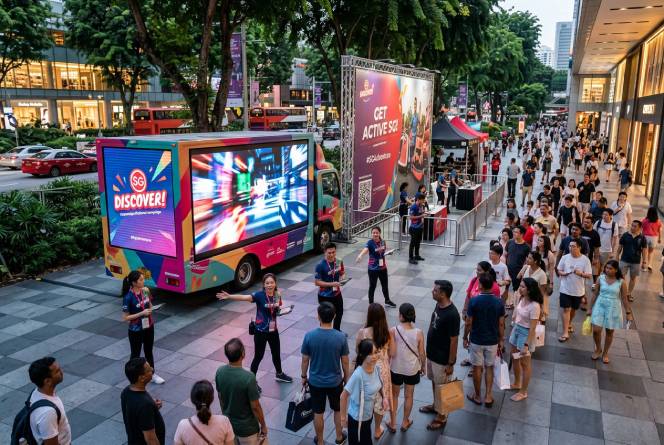
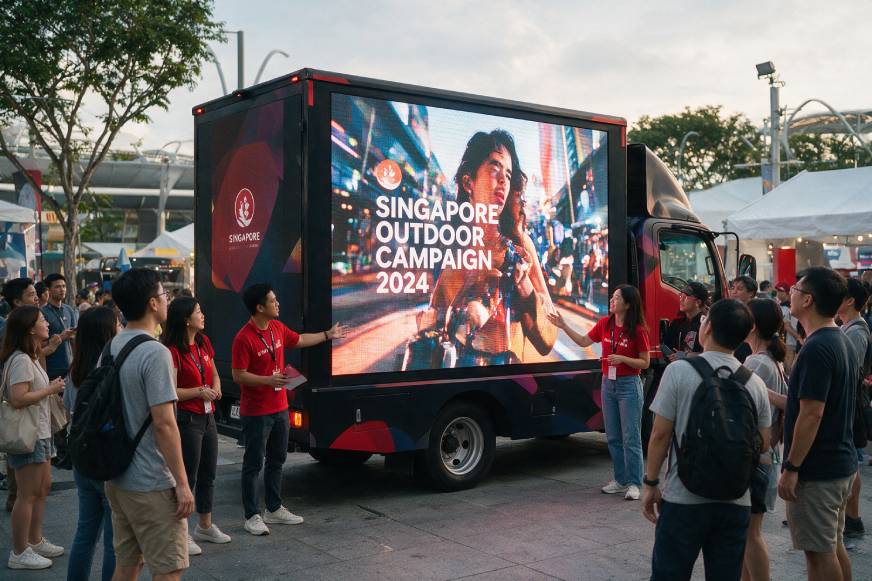
Unicom Marketing’s mobile event spaces include branded trucks, Kombi vans, LED trucks, trailers, and buses that can be customised for roadshows, product demonstrations, sampling, and interactive campaigns across different Singapore locations.
How Event Agencies Plan the Interactive Customer Journey
Interactive technology should be part of a clear customer journey rather than a separate attraction.
The event agency may plan the experience around five simple stages:
- The customer notices the campaign.
- The setup or promoter explains the activity.
- The customer participates.
- The activity connects back to the brand message.
- The customer receives a reward or completes the desired action.
Each step should feel natural and easy to understand.
For example, customers may first notice a digital game displayed on a large screen. A promoter invites them to participate, they complete the challenge, receive a product sample, and then scan a QR code for a promotional offer.
This creates a complete experience rather than an isolated game.
Testing Is Essential Before the Campaign Goes Live
Interactive technology should be tested before the event opens to the public.
The event team needs to confirm that:
- Screens and devices are working
- Internet connections are stable
- QR codes lead to the correct pages
- Forms can be submitted
- Games record results correctly
- Rewards are triggered properly
- Instructions are easy to understand
- Customer data is stored correctly
- Backup equipment or processes are available
The full activity should also be tested from a customer’s perspective. This helps identify confusing steps, long loading times, unclear messages, or unnecessary delays.
Measuring Participation and Campaign Performance
One advantage of digital interaction is that it can generate useful campaign data.
Depending on the activity, brands may be able to measure:
- Number of game participants
- QR code scans
- Completed surveys
- Registrations
- Voucher redemptions
- App downloads
- Social media shares
- Product recommendations viewed
- Average participation time
- Repeat interactions
These figures should be reviewed together with on-ground observations. High participation does not always mean the brand message was understood, so feedback from promoters and event supervisors remains valuable.
The campaign results can help the brand improve future activities, simplify the customer journey, or identify which technology received the strongest response.
Avoid Using Technology Only for Visual Impact
Interactive equipment can make a campaign look modern, but visual impact alone is not enough.
Technology may become a distraction when:
- The activity has no connection to the brand
- Instructions are too complicated
- Customers must wait too long
- The equipment is unreliable
- The reward is unclear
- Promoters are unable to explain the experience
- Too much personal information is requested
- The digital activity overshadows the product
The event agency should begin with the campaign objective and then select the technology that supports it.
A simple QR survey that generates useful customer feedback may be more valuable than an expensive installation that attracts attention but produces no meaningful result.
Choosing the Right Event Agency in Singapore
Brands should look for an event agency that understands both creative technology and practical on-ground execution.
The agency should be able to explain:
- Why the technology suits the campaign
- How customers will participate
- What equipment is required
- How the activity connects with the brand
- What data can be measured
- How technical issues will be handled
- What role promoters will play
- How the setup fits the venue or mobile space
Unicom Marketing provides brand activation, mobile event spaces, retail engagement, and interactive digital solutions for on-ground campaigns. Its retail entertainment services are designed to encourage customer participation during in-store promotions, roadshows, and experiential events.
Conclusion
Interactive technology can make an on-ground campaign more participative, memorable, and measurable.
Digital games, QR activities, touchscreens, surveys, photo experiences, motion-based interactions, and instant rewards give customers a clear reason to engage with the brand. However, the technology must remain simple, relevant, and connected to the campaign objective.
An experienced event agency in Singapore can help brands choose the right tools, plan the customer journey, prepare the equipment, brief promoters, manage the live experience, and review participation data.
When interactive technology works together with strong creative planning and human engagement, it can turn a standard event setup into a brand experience that audiences actively want to join.