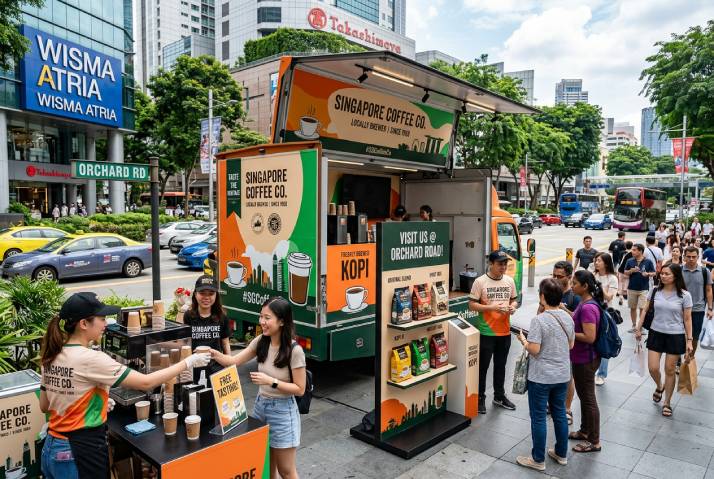
An event truck campaign gives brands a different way to reach customers beyond a standard booth or fixed event space. Instead of waiting for people to visit one location, the campaign can travel to where the audience is, creating visibility in malls, heartland areas, business districts, outdoor spaces, campuses, and community locations.
However, simply using an event truck in Singapore does not automatically make a campaign successful. The truck must be designed, positioned, and managed in a way that attracts attention and encourages people to engage with the brand.
A standout event truck campaign combines strong branding, smart location planning, clear customer flow, engaging activities, and smooth on-site execution. When these elements work together, the truck becomes more than transport. It becomes a mobile brand experience.
Strong Vehicle Branding That Is Easy to Recognise
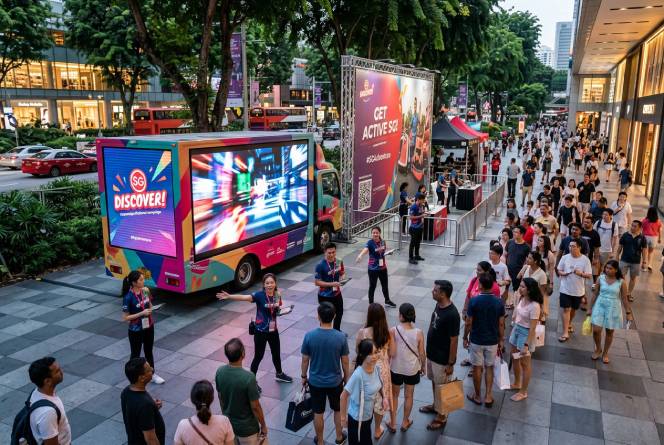
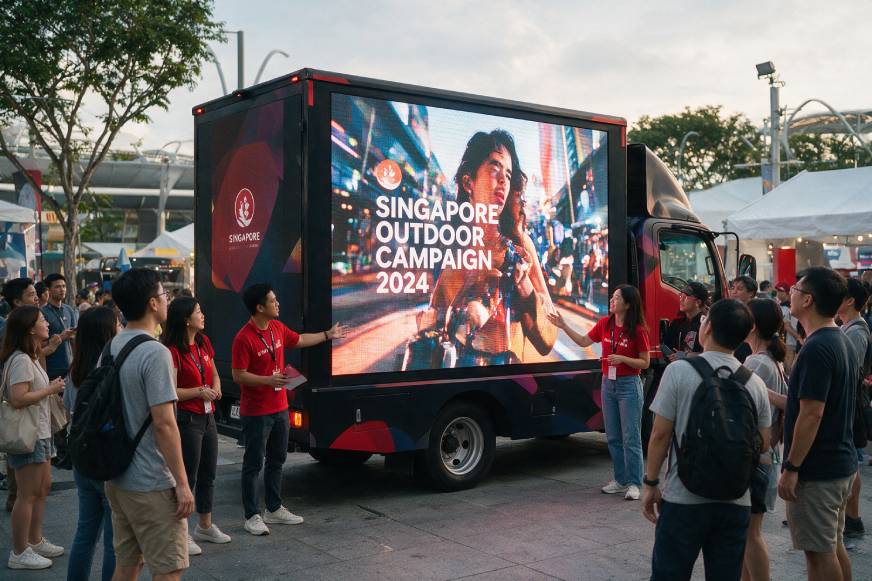
The first thing people notice is the truck itself. A plain or poorly designed vehicle may not attract much attention, even in a busy area. Strong vehicle branding helps the campaign stand out before customers even approach the activation space.
The design should make the brand easy to recognise from a distance. This may include bold campaign visuals, clear logo placement, readable messaging, product images, and colours that match the brand identity.
The message should also be simple. People may only have a few seconds to notice the truck while walking past or driving by. If the design has too many words or too many competing visuals, the campaign may lose impact.
A good event truck design should answer one question quickly: “What is this campaign about?”
A Clear Campaign Purpose
An event truck campaign should not be used only because the format looks interesting. It should support a clear campaign objective.
The brand may want to launch a product, distribute samples, create awareness, collect leads, promote a service, provide demonstrations, or create a photo-worthy experience. The purpose of the campaign affects how the truck should be designed and operated.
For example, a sampling campaign may need product storage, distribution counters, hygiene flow, and promoter support. A product demonstration campaign may need screens, display areas, and enough space for customers to watch. A lead-generation campaign may need QR registration, consultation points, and a clear follow-up process.
When the objective is clear, the event truck can be planned as a practical campaign space rather than just a branded vehicle.
Location Planning That Matches the Target Audience
One of the biggest advantages of an event truck is mobility. The campaign can move across different parts of Singapore and reach customers in more than one area.
However, location selection should not be based only on high foot traffic. The audience must also match the brand’s target market.
A campaign aimed at office workers may perform better in business districts during lunch or after-work hours. A family-focused campaign may work better near malls, community areas, or weekend locations. A youth-oriented campaign may benefit from campuses, lifestyle areas, or public event spaces.
A good campaign also considers access, visibility, stopping points, nearby crowd movement, setup requirements, and the time customers are likely to engage.
An event truck campaign stands out when it appears in the right place, at the right time, for the right audience.
A Setup That Invites Customers to Approach
A branded truck can attract attention, but customers still need to feel comfortable approaching it.
The setup around the truck should be open, organised, and easy to understand. Customers should know where to stand, who to speak to, what activity is available, and what they can receive by joining.
If the space feels blocked, crowded, or unclear, people may only look at the truck from a distance without participating.
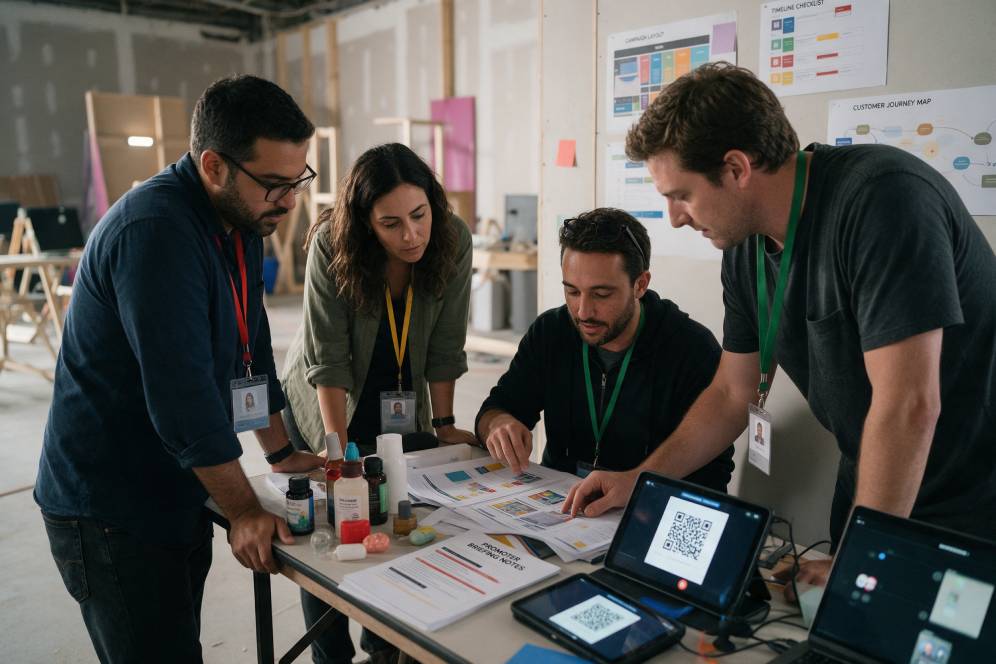
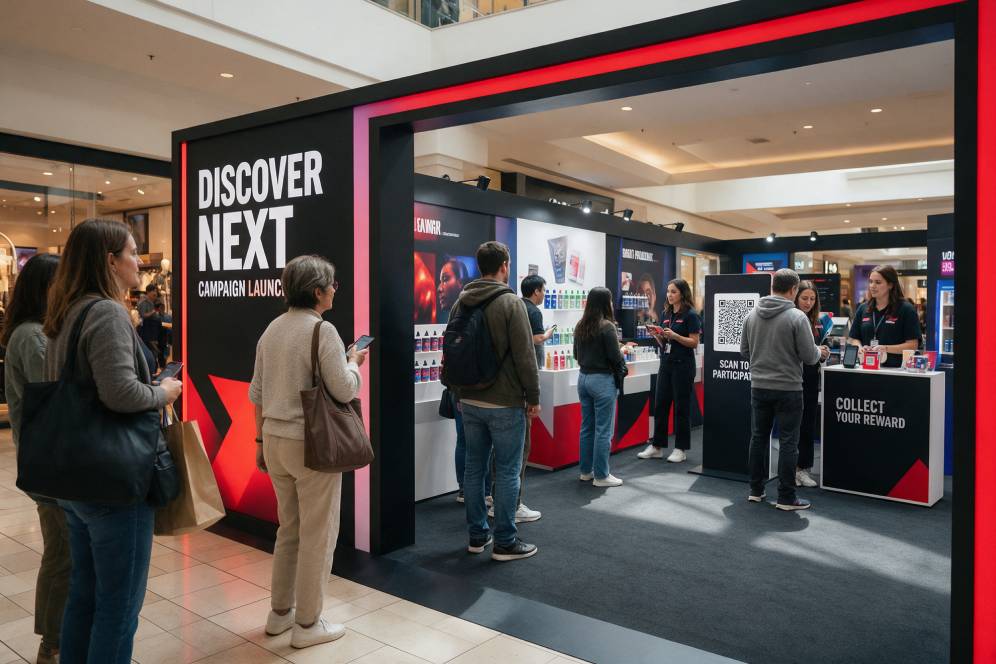
The agency should plan where promoters stand, where products are displayed, how queues are managed, where customers enter the activity, and where rewards or samples are collected. Good layout planning makes the truck feel like an accessible campaign space instead of a display that people are unsure how to enter.
Customer Engagement Beyond Visual Impact
An event truck already creates visual presence, but visibility alone is not enough. The campaign should also give customers a reason to stop and interact.
This may include product sampling, live demonstrations, digital games, QR activities, lucky draws, photo opportunities, mini consultations, or interactive product displays.
The activity should connect naturally to the brand message. If people remember the activity but forget the brand, the campaign has not fully achieved its purpose.
For example, a food brand may offer sampling with a quick flavour vote. A lifestyle brand may create a photo moment with social sharing. A technology brand may provide a short live demo supported by QR registration. The right activity turns attention into participation.
A Smooth Customer Journey
A standout event truck campaign should feel easy from start to finish.
The customer journey may begin when someone notices the truck from a distance. They then approach the campaign, speak to a promoter, join an activity, learn about the product, scan a QR code, receive a sample or reward, and leave with a clear impression.
Each step should connect smoothly. Customers should not feel lost after approaching the truck. They should not need to ask several people what to do. They should not join an activity without understanding the brand behind it.
A smooth flow helps customers enjoy the experience and makes the campaign easier for the event team to manage.
Promoters Who Bring the Campaign to Life
Promoters are especially important in event truck campaigns because the truck may attract attention, but the people on-site guide the actual interaction.
A well-trained promoter can invite customers naturally, explain the campaign, demonstrate the product, answer questions, manage queues, and encourage the next action.
Promoters should understand the product, the campaign message, the activity mechanics, the customer flow, and the brand tone. Their role is not only to distribute items but to help customers understand why the campaign matters.
In Singapore, where many customers are used to seeing promotions in public spaces, a friendly and confident promoter can make the difference between people walking past and people choosing to participate.
Digital Elements That Extend the Campaign
Digital engagement can make an event truck campaign more interactive and measurable.
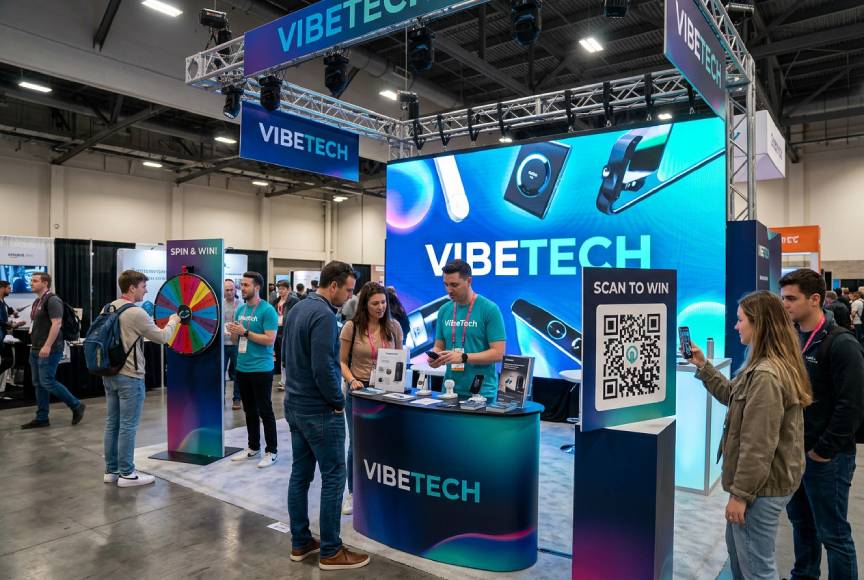
QR codes can be used for registration, surveys, app downloads, product information, lucky draws, or voucher redemption. Screens can show videos, product benefits, campaign visuals, or live content. Digital games can encourage participation and create a more enjoyable experience.
These tools help connect the physical event truck campaign with online follow-up. Customers may continue interacting with the brand after leaving the location through email, social media, promotions, or website visits.
However, the digital journey should remain simple. A customer standing near an event truck may not want to complete a long form or complicated process. The best digital elements are quick, clear, and directly connected to the reward or campaign purpose.
Consistency Across Multiple Stops
Many event truck campaigns involve more than one location. This makes consistency important.
Customers in different areas should receive the same core brand message and quality of experience. The truck design, promoter briefing, campaign activity, product display, and customer flow should remain consistent even when the physical environment changes.
At the same time, the setup may need small adjustments based on each location. A busy outdoor space may require stronger queue management, while a quieter community area may allow for longer conversations.
A good campaign balances consistency with flexibility. The experience should feel like one campaign, even when it moves across different locations.
Proper Logistics and On-Site Readiness
Event truck campaigns require careful planning behind the scenes.
The team must consider route timing, vehicle access, setup requirements, product stock, power needs, equipment testing, manpower schedule, weather conditions, and campaign materials.
If logistics are not handled properly, the campaign may face delays or appear unprepared. For example, the truck may arrive late, product samples may run out too early, screens may not work, or promoters may not have the right materials.
An experienced event team helps prepare these details before the campaign goes live. Good execution helps the truck campaign look professional and gives customers more confidence in the brand.
A Memorable Brand Experience
The strongest event truck campaigns are memorable because they create an experience that customers can connect with.
This does not always mean the campaign needs to be large or complicated. Sometimes, a clear message, attractive vehicle design, friendly promoters, simple activity, and relevant reward are enough to create a strong impression.
A memorable event truck campaign should leave customers with a clear idea of what the brand offers and why it matters. It should also give them a next step, such as visiting a website, redeeming an offer, following the brand, trying the product, or making an enquiry.
The goal is not only to be seen. The goal is to be remembered.
Why the Right Event Partner Matters
An event truck campaign involves creative planning, vehicle branding, location strategy, customer engagement, manpower coordination, logistics, and live execution.
The right event partner can help brands plan the campaign as a complete experience, not just a vehicle rental. This includes deciding how the truck should look, where it should go, how customers will engage, what promoters should say, and how results will be reviewed.
For brands in Singapore, this support is important because public spaces are competitive and customer attention is limited. A well-planned event truck campaign can help the brand stand out while delivering a more organised and memorable experience.
Conclusion
An event truck campaign stands out in Singapore when it combines strong vehicle branding, clear messaging, suitable locations, inviting setup design, engaging activities, smooth customer flow, trained promoters, digital touchpoints, consistent execution, and strong logistics planning.
The truck itself may attract attention, but the full experience is what makes customers remember the brand.
For brands planning mobile roadshows, product sampling, launches, demonstrations, or public engagement campaigns, using an event truck in Singapore can be a powerful way to bring the brand closer to customers.
When the campaign is planned properly, the event truck becomes more than a moving display. It becomes a mobile brand experience that helps people see, understand, and connect with the brand in real life.