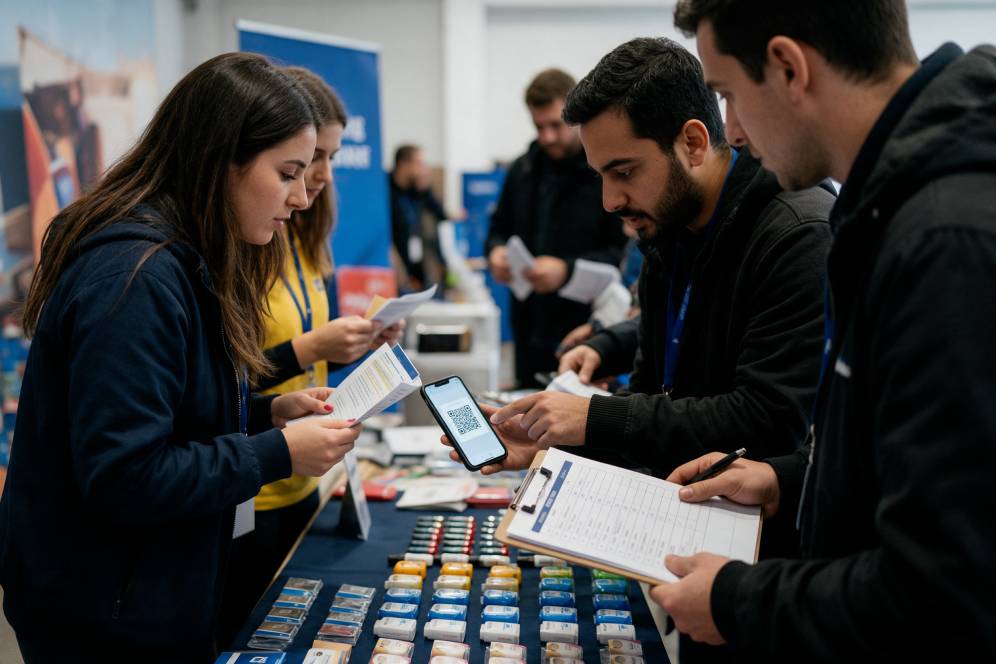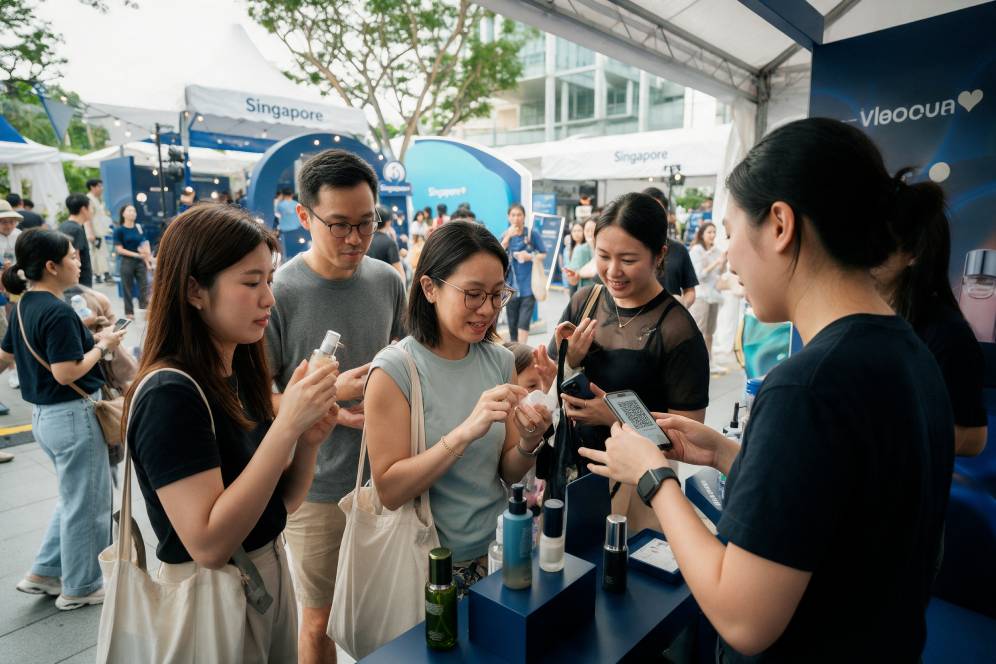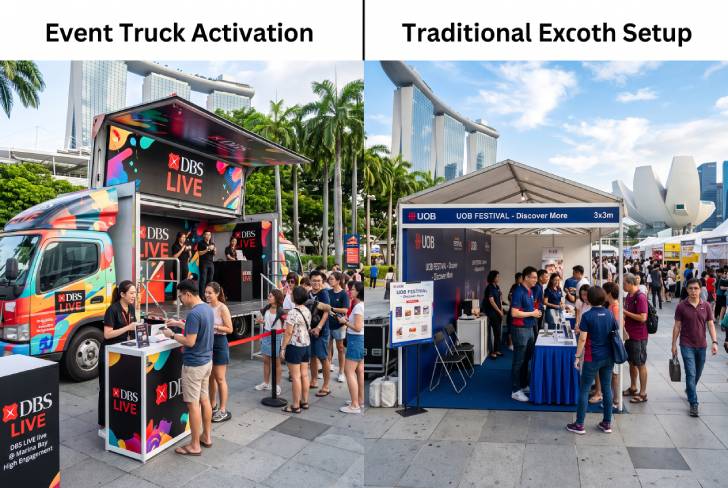
Choosing between an event truck and a traditional booth can affect how customers notice, approach, and engage with your campaign. Both formats can work well, but they serve different purposes.
A traditional booth is often suitable for malls, retail areas, exhibitions, and indoor roadshows. An event truck can be useful when brands want stronger visibility, mobility, outdoor presence, or a more unique campaign setup.
For brands considering an event truck in Singapore, the decision should not be based only on which format looks more impressive. The better choice depends on the campaign objective, location, audience, product type, customer journey, and budget.
Start with the Campaign Objective
Before choosing the setup, brands should ask what the campaign needs to achieve.
If the goal is simple product sampling in a mall, a booth may be enough. If the goal is to create strong outdoor visibility or bring the campaign across several locations, an event truck may be more suitable.
The campaign objective should guide the format. A setup that looks attractive but does not support the goal may not create strong results.
For example, a lead-generation campaign may need space for QR registration and consultation. A product launch may need a more noticeable setup. A retail campaign may need to fit close to the point of purchase.
When an Event Truck Works Better
An event truck works well when the campaign needs to feel mobile, visible, and different from a regular booth.
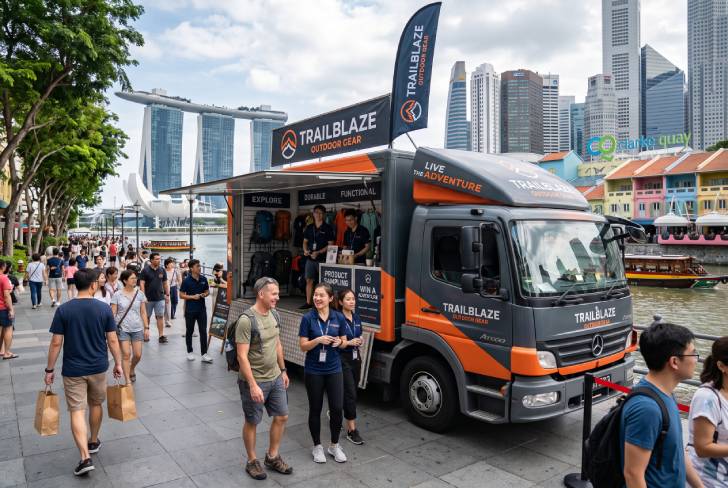
The truck can act as a moving brand space with exterior branding, product display, sampling counters, and activity areas. It can help brands create a stronger presence in outdoor or high-traffic locations.
Better for Outdoor Visibility
An event truck can attract attention from a distance because of its size, branding, and physical presence.
Better for Multi-Location Campaigns
If the campaign needs to move between different places, a mobile setup can support repeated exposure across locations.
Better for Memorable Activations
A truck can make the campaign feel more unique, especially when the brand wants customers to remember the experience.
An event truck is useful when mobility and visibility are part of the campaign strategy.
When a Traditional Booth Works Better
A traditional booth may be more suitable when the campaign is indoors, space is limited, or the brand needs a compact setup.
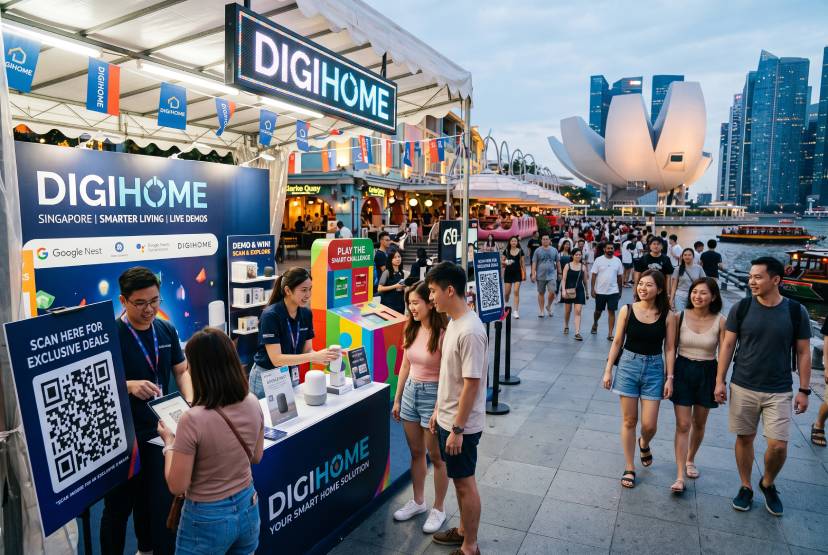
Booths are commonly used in malls, exhibitions, retail stores, atriums, and event halls. They can be easier to place in fixed locations and may work well for product displays, promoter conversations, QR registrations, and sampling activities.
Better for Indoor Spaces
A booth can fit more easily into malls, stores, and exhibitions where vehicle access is not possible.
Better for Compact Campaigns
If the campaign has a simple flow, a booth may be enough to support product trial, display, and customer enquiry.
Better for Controlled Environments
Indoor booths may provide more predictable lighting, weather protection, and venue support.
A booth is often practical when the campaign does not need mobility or a large outdoor presence.
Compare Visibility and Customer Attention
Visibility is one of the biggest differences between the two formats.
An event truck usually has stronger physical presence. It can stand out in open spaces and create curiosity because it feels less common than a standard booth.
A traditional booth can still be visible, especially with good signage, lighting, product displays, and promoter placement. However, in a crowded indoor event area, it may compete with many other booths.
If the campaign needs to create a strong first impression from a distance, an event truck may have an advantage. If the campaign takes place in a controlled indoor space with steady foot traffic, a booth may work well.
Compare Customer Flow and Space
Customer flow is important for both formats.
An event truck may provide a clear campaign base, but brands still need to plan where customers will stand, how they will queue, where they will scan, and where they will collect rewards.
A traditional booth may be easier to control in a smaller area, but space can become tight if the campaign has too many activities or visitors.
The best setup is not always the largest one. It is the setup that helps customers move through the experience smoothly.
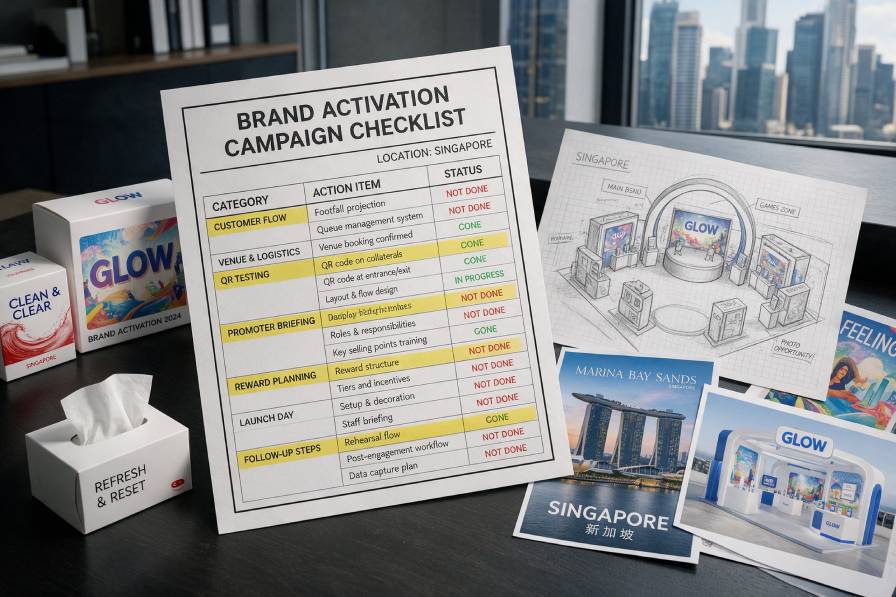
Brands should think about entry points, activity zones, product display, QR registration, reward redemption, and exit flow before choosing the format.
Compare Product Sampling and Demonstrations
Both formats can support product sampling and demonstrations, but the experience may feel different.
An event truck can create a stronger sampling moment in outdoor or public areas. It can also provide storage and a branded serving point, depending on the setup.
A traditional booth can work well for smaller product trials, beauty demos, food sampling, retail demonstrations, or product education inside a mall or store.
If the product needs a high-impact launch or outdoor sampling, an event truck may be more suitable. If the product needs close discussion or controlled indoor demonstration, a booth may be better.
Compare Branding and Campaign Experience
Branding is not only about placing logos. It is about how customers experience the campaign.
An event truck can become a branded environment on wheels. Its exterior and structure can support a strong visual identity, making it useful for campaigns that need to feel bold or mobile.
A traditional booth can still offer strong branding through backdrop design, counters, product display, lighting, digital screens, and promoter uniforms.
The right choice depends on how the brand wants to be experienced. If the campaign needs to feel flexible and noticeable, an event truck may work better. If the campaign needs to feel focused and controlled, a booth may be more practical.
Compare Logistics and Planning
An event truck usually requires more planning than a standard booth.
Brands may need to consider vehicle access, parking, permits, outdoor space, safety, power supply, weather, setup timing, route planning, and customer movement.
A traditional booth may involve simpler logistics, but it still needs proper planning. Brands must consider venue rules, setup dimensions, storage, product stock, signage, promoters, digital touchpoints, and queue flow.
Both formats need planning. The difference is that an event truck often has more location and mobility considerations.
Choose Based on the Customer Journey
The final decision should depend on the customer journey.
Customers should know where to start, what to do, how to interact, where to scan, and what the next step is. Whether the format is a truck or booth, the journey must feel clear.
If the setup attracts attention but customers do not know how to participate, the campaign may underperform. If the setup is simple but the flow is clear and useful, it can still create strong engagement.
A good campaign format should support the full journey from first attention to final action.
Why the Right Event Team Matters
Choosing between an event truck and a traditional booth is not only a design decision. It is a strategic campaign decision.
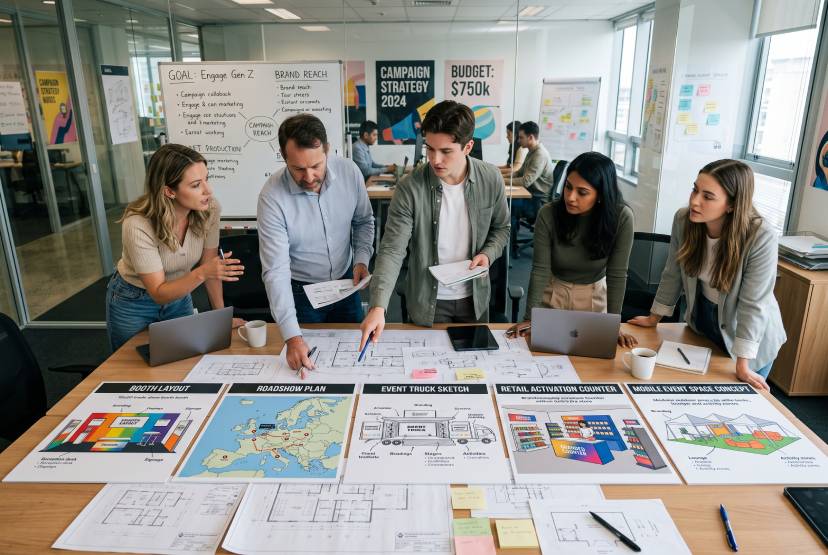
A reliable event team can help brands review the campaign objective, location, customer behaviour, product type, visibility needs, interaction flow, digital touchpoints, logistics, and budget.
This helps brands avoid choosing a format only because it looks attractive. Instead, the setup is chosen because it supports the campaign goal and customer experience.
Conclusion
An event truck and a traditional booth can both work well, but they are suitable for different campaign needs.
An event truck in Singapore may be better when the campaign needs mobility, outdoor visibility, strong branding, product sampling, or a memorable setup. A traditional booth may be better for indoor spaces, compact campaigns, controlled environments, and focused customer conversations.
The best choice depends on the campaign objective, location, product experience, customer journey, and practical setup needs.
When the format supports the customer experience, the campaign becomes easier to notice, easier to join, and more effective for the brand.