A successful brand activation does not end when a customer first stops at the booth, tries a sample, scans a QR code, or speaks to a promoter. That first interaction is important, but it is only the beginning of the customer journey.
Many brands focus heavily on attracting attention during a campaign. They plan the booth design, visuals, product display, promoter approach, and giveaways. These are important, but if there is no plan to continue engagement after the first contact, the campaign may lose valuable opportunities.
An experienced activation agency in Singapore helps brands design activations that keep customers engaged beyond the first moment. The goal is to move customers from initial interest to deeper understanding, stronger recall, and meaningful next actions.
Why the First Interaction Is Only the Starting Point
The first interaction helps customers notice the brand. It may happen when they see the campaign setup, receive a sample, join a game, or ask a question.
However, customers may not be ready to take action immediately. They may need more product information, a reminder, a stronger reason to buy, or time to compare options. If the brand does not continue the conversation, the customer may forget the campaign quickly.
This is why post-interaction engagement matters. A strong activation campaign should guide customers from first attention to product understanding, trust, and action.
For example, after a customer tries a product, the next step may be a voucher, product guide, QR landing page, social follow, WhatsApp enquiry, or store visit reminder. These touchpoints help keep the brand present after the live campaign moment has passed.
Creating a Clear Next Step After Participation
Every activation campaign should have a clear next step.
Customers should know what to do after joining the activity. If they try a sample, should they scan for a voucher? If they play a game, should they register for a reward? If they ask about the product, should they receive a follow-up link?
Without a clear next step, the interaction may end too quickly.
A good activation agency helps brands plan the campaign flow so each engagement naturally leads to another action. This does not mean forcing customers into a hard sell. It means making the next step easy, useful, and relevant.
Simple next steps can include:
- Scan to receive product information
- Redeem a campaign voucher
- Register for a free consultation
- Follow the brand for updates
- Visit a nearby store
- Save an offer for later
- Submit feedback after trying the product
When the next step is clear, customers are more likely to continue engaging with the brand.
Using QR Codes and Digital Touchpoints Wisely
QR codes are commonly used in activation campaigns, but they should not be added without purpose.
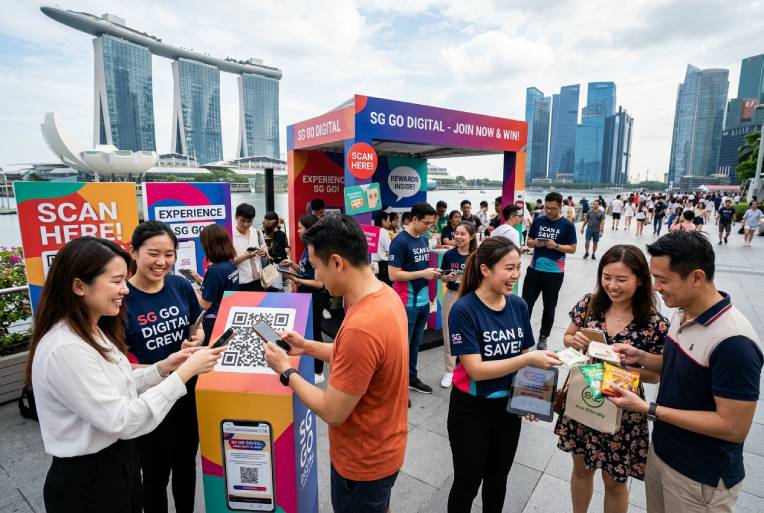
A QR code should connect the customer to something valuable. This may be a product page, special offer, registration form, game, survey, e-voucher, WhatsApp chat, social media page, or campaign landing page.
The digital journey should be simple. If the page takes too long to load or the form is too complicated, customers may drop off. The benefit should also be clear before the customer scans.
For example, “Scan to Redeem Your Sample Voucher” is stronger than simply “Scan Here.” It tells the customer what they will receive and why the action matters.
An activation agency in Singapore can help brands plan QR touchpoints that support the customer journey instead of interrupting it.
Turning Product Trials into Continued Interest
Product trials are powerful because they let customers experience the product directly. However, a trial alone may not be enough to create lasting interest.
After customers try a product, the campaign should give them a reason to remember it. This may include a short benefit explanation, product card, digital brochure, voucher, retail location reminder, or follow-up message.
Promoters also play an important role. They can ask for quick feedback, answer questions, and guide customers toward the next step.
For example, after a customer tastes a new drink, the promoter can explain where to buy it and offer a QR voucher. After a customer tests a skincare product, the promoter can recommend a suitable option and share a product link.
This keeps the engagement active after the sample or trial is completed.
Making Rewards More Relevant to the Customer Journey
Rewards can attract participation, but they should also support continued engagement.
A giveaway that has no connection to the product may create short-term excitement but limited brand recall. A more relevant reward helps customers stay connected to the brand.
For example, a voucher encourages future purchase. A sample pack allows the customer to continue trying the product at home. A digital guide helps customers understand product usage. A consultation offer moves interested customers closer to enquiry.
The reward should match the campaign objective. If the brand wants sales interest, the reward should encourage purchase or store visit. If the brand wants lead generation, the reward should support registration or follow-up.
A thoughtful reward strategy helps turn one-time participation into a stronger customer relationship.
Keeping the Message Consistent After the Event
Customers should receive the same core message before, during, and after the activation.
If the live campaign focuses on one product benefit, the follow-up content should reinforce that message. If the event promotes a limited-time offer, the post-campaign reminder should make that offer clear. If the campaign introduces a new product, the follow-up should help customers learn more about it.
Consistency helps customers remember the brand more easily. It also makes the overall campaign feel more professional.
An activation agency can help align event signage, promoter scripts, QR pages, digital content, vouchers, and post-campaign messages so they all support the same campaign goal.
Using Promoters to Encourage Deeper Conversations
Some customers need more than a quick activity. They may have questions, concerns, or stronger interest in the product.
Promoters should be trained to identify these customers and guide them into deeper conversations. This may include explaining product benefits, recommending options, collecting contact details, or directing customers to a sales team.
A promoter should not treat every visitor exactly the same. Some customers only want a quick sample, while others may be ready to enquire or purchase.
By reading customer behaviour and responding naturally, promoters can help brands keep engaged customers in the conversation longer.
Collecting Feedback for Future Engagement
Customer feedback is one of the most valuable parts of brand activation.
During live campaigns, customers may ask questions, share opinions, compare products, or explain what they like and dislike. These comments can help brands understand how people respond to the campaign message.
Feedback can be collected through promoter notes, short surveys, QR forms, product trial comments, or customer conversations.
This information can then be used to improve future campaigns, product messaging, sales follow-up, or digital content. In this way, engagement does not only continue with the customer. It also helps the brand learn and improve.
Connecting Physical Events with Online Channels
A strong activation campaign often connects offline engagement with online touchpoints.
After meeting the brand in person, customers may continue the journey through a website, social media page, WhatsApp conversation, online store, app, or email follow-up.
This connection is useful because not every customer will act immediately during the event. Some may prefer to decide later. A digital touchpoint gives them a way to return to the brand when they are ready.
For example, a customer may scan a QR code at the event, save a voucher, follow the brand online, and make a purchase later. Without the digital touchpoint, that interest may disappear after the event ends.
Why the Right Activation Agency Matters
Keeping customers engaged after the first interaction requires planning beyond event setup.
A reliable activation agency in Singapore helps brands design the full journey, including the first touchpoint, activity flow, promoter approach, digital journey, reward strategy, feedback collection, and post-campaign follow-up.
This is useful for product launches, roadshows, sampling campaigns, retail activations, mobile event spaces, and interactive brand experiences.
The agency helps ensure that each part of the campaign leads naturally to the next. Instead of creating a one-time interaction, the campaign becomes a structured customer journey.
Conclusion
The first interaction in a brand activation campaign is important, but it should not be the final step.
Brands need a plan to keep customers engaged after they stop, try, scan, ask, or participate. This can be done through clear next steps, QR journeys, relevant rewards, promoter conversations, consistent messaging, feedback collection, and online follow-up.
An experienced activation agency in Singapore helps brands design campaigns that continue the conversation beyond the live event moment.
When customers stay engaged after the first interaction, the campaign has a better chance of creating stronger recall, deeper trust, and more meaningful results.