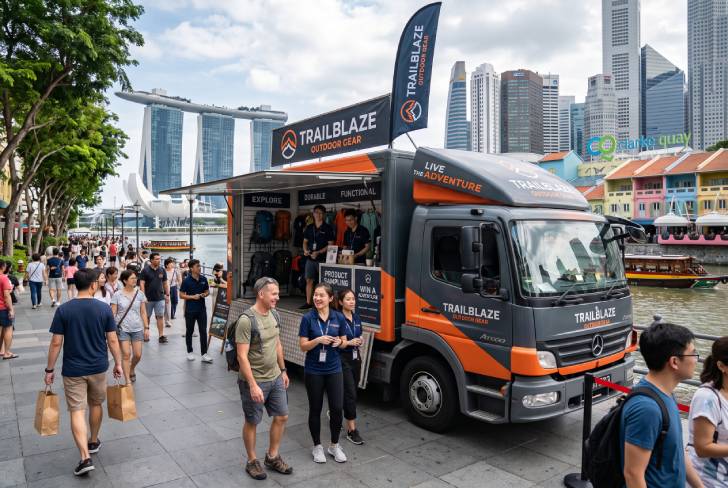
An event truck can be a powerful campaign format when a brand wants to create strong visibility, reach different locations, and offer customers a more memorable on-ground experience. Unlike a fixed booth, an event truck gives the campaign a mobile and eye-catching presence.
However, not every campaign needs an event truck. The format works best when it supports the campaign objective, customer journey, product experience, and location strategy.
For brands considering an event truck in Singapore, the key question is not only whether the truck looks impressive. The real question is whether it helps customers notice, approach, understand, and engage with the campaign more effectively.
When the Campaign Needs Stronger Visibility
An event truck is useful when the brand needs to stand out in a busy environment.
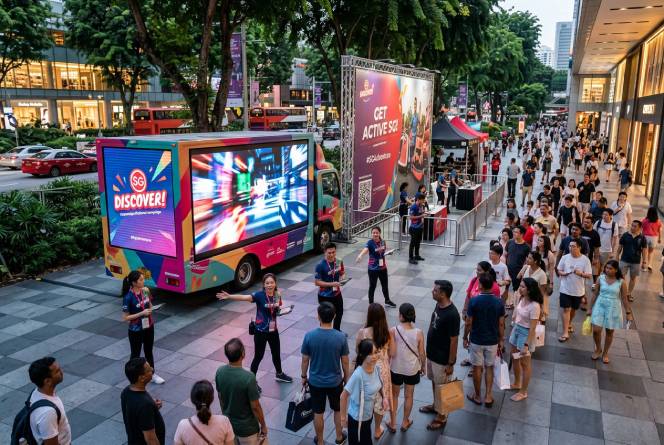
In areas where customers are surrounded by many booths, signs, shops, and advertisements, a standard setup may not always attract enough attention. A branded truck can create a stronger visual impact because it feels different from a normal booth.
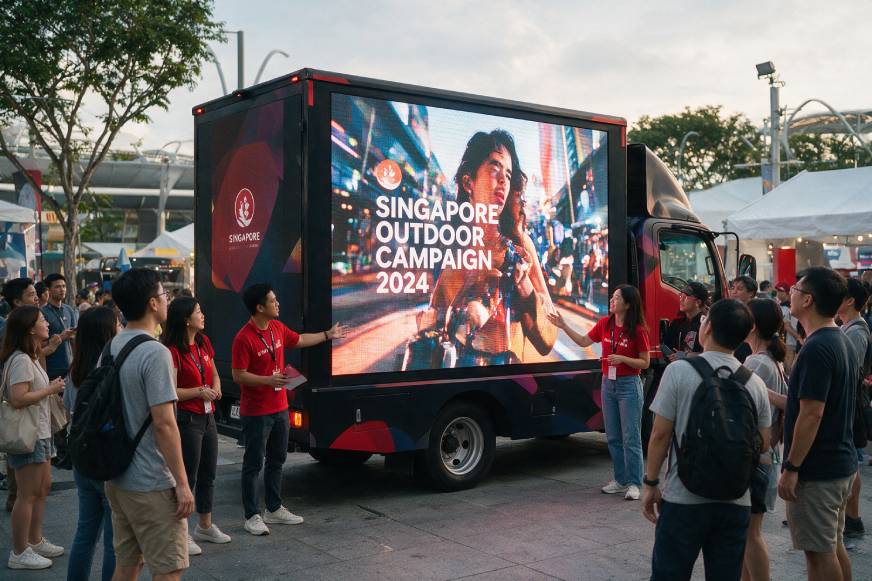
The size, exterior branding, lighting, open display panels, and mobile presence can help customers notice the campaign from a distance.
Visibility is one of the strongest reasons to use an event truck, especially when the campaign needs to create a strong first impression.
When the Brand Wants a Mobile Campaign Format
A traditional booth usually stays in one place. An event truck can support campaigns that need movement across different areas.
This is useful when brands want to reach more than one location, test different customer zones, or bring the campaign closer to specific audiences.
For example, a campaign may start near a business district, move to a lifestyle area, and later appear at a public event location. This type of mobility allows the brand to create repeated exposure in different environments.
A mobile campaign format is also useful when the brand wants to create a sense of activity and movement around the campaign.
When the Campaign Involves Product Sampling
Event trucks can work well for product sampling campaigns.
The truck can provide a clear serving point, branded backdrop, storage area, and customer-facing counter. This makes it easier to distribute samples while keeping the campaign organised.
For food, beverage, beauty, lifestyle, and consumer products, sampling from an event truck can make the experience feel more noticeable and structured.
Food and Beverage Sampling
An event truck can create a strong street-level sampling experience where customers can approach, try the product, and move on easily.
Lifestyle and Consumer Products
For lifestyle products, the truck can act as a display and experience point where customers can see, touch, or test the product.
When sampling is part of the campaign goal, the truck should be planned with customer flow, hygiene, product storage, and promoter guidance in mind.
When the Campaign Needs a Clear Brand Presence
An event truck can act as a moving brand space.
The exterior can be fully branded with campaign colours, product visuals, key messages, and promotional graphics. This helps create stronger brand recognition before customers even interact with the promoters.
A truck setup also gives the campaign a more defined presence. Customers can immediately see where the campaign is happening and where to approach.
This is helpful for brands that want their campaign to feel more visible, memorable, and organised in an open or outdoor setting.
When the Brand Wants to Create a Launch Moment
Product launches can benefit from an event truck when the brand wants to create a sense of arrival and excitement.
A truck can be used as a launch display, demo area, sampling counter, or mobile product showcase. It gives the campaign a physical presence that feels different from a regular booth.
For a new product, the event truck can make the launch feel more noticeable. Customers may be more curious to approach because the setup looks unique.
The truck should not only look impressive; it should also help explain the product clearly.
When Outdoor or High-Traffic Locations Are Part of the Strategy
Event trucks can be useful for outdoor activations, public spaces, community areas, and selected high-traffic locations.
Because the truck has its own structure, it can create a strong setup even when the campaign is not inside a mall or retail space. This makes it suitable for campaigns where brands want to reach customers in more open environments.
However, outdoor campaigns require proper planning. Brands should consider space, access, safety, power, weather, parking, permits, customer movement, and operational support.
A good event truck campaign should be practical, not only eye-catching.
When the Campaign Needs Product Display and Interaction
An event truck can support both display and interaction.
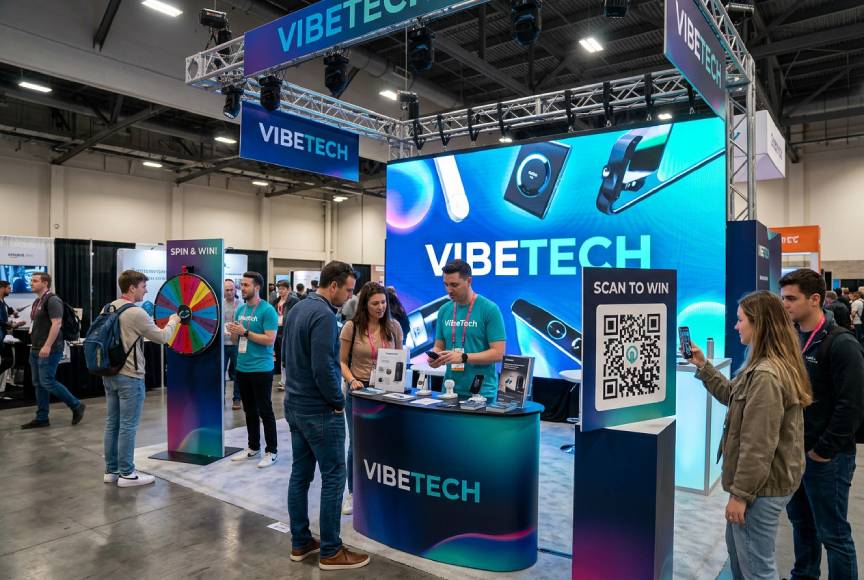
The truck can show the product visually while creating space for promoters to speak with customers, run demos, distribute samples, or guide QR registration.
This is useful when the product needs explanation or when customers need to experience it before they understand the value.
For example, the setup can include a display wall, product counter, QR stand, small demo area, or sample distribution point. These elements help turn the truck from a visual attraction into a real customer engagement space.
When the Campaign Should Feel More Memorable
Customers may see many booths and roadshows. An event truck can create a stronger memory because it feels different.
The truck format can make the campaign feel more like an experience than a standard promotional setup. This is useful when the brand wants customers to remember the activation after they leave.
However, memorability should come from more than the vehicle. The campaign still needs a clear message, friendly promoters, useful activity, and clear next step.
A truck may attract attention, but the full experience is what customers remember.
When the Campaign Needs Flexible Setup Options
Event trucks can offer flexibility depending on the campaign concept.
Some campaigns may use the truck mainly for branding and visibility. Others may use it for sampling, product display, demonstration, storage, or QR redemption.
The setup can be adapted based on the campaign goal, but it should not become too crowded. Customers should still understand where to approach, what to do, and what happens next.
A flexible setup works best when the customer journey remains simple.
When an Event Truck May Not Be the Best Choice
An event truck is not always the right format.
If the campaign is inside a small retail area, a compact booth or counter may work better. If the goal is deep one-to-one consultation, a quieter indoor setup may be more suitable. If the location has strict space or vehicle restrictions, the truck may create operational challenges.
Brands should choose an event truck only when it supports the campaign objective and customer experience.
The format should be chosen for practical campaign value, not only because it looks different.
Why Planning Matters for Event Truck Campaigns
A successful event truck campaign requires more than booking a vehicle.
Brands need to plan the campaign message, truck branding, product display, promoter briefing, sampling flow, customer entry point, QR journey, safety, logistics, location suitability, and follow-up action.
An experienced event team can help ensure the truck supports both visibility and engagement. Without proper planning, the truck may attract attention but fail to create meaningful customer interaction.
Conclusion
Brands should use an event truck when the campaign needs stronger visibility, mobility, outdoor presence, product sampling, launch impact, or a more memorable customer experience.
An event truck in Singapore can help brands stand out and reach customers in a more flexible way. However, the truck should always support the campaign goal, customer journey, and engagement plan.
When the event truck is planned properly, it becomes more than a branded vehicle. It becomes a mobile campaign space that helps customers notice the brand, interact with the product, and take the next step.