A brand activation campaign needs to attract attention, but attention alone is not enough. Customers may notice a campaign, take a quick look, and continue walking if there is no clear reason to participate.
A strong activation should also guide customers toward action. This action may be trying a product, scanning a QR code, redeeming a voucher, asking a question, joining an activity, visiting a store, or making an enquiry.
This is why the best activation agency in Singapore looks at both attention and action. A campaign should not only be seen. It should help customers understand what to do next and why it matters.
Attention Is the First Step
Attention is important because customers need to notice the campaign before they can engage with it.
In a busy location, people are often surrounded by advertisements, shops, signs, digital screens, and other distractions. A brand activation needs to stand out enough to make customers slow down or look closer.
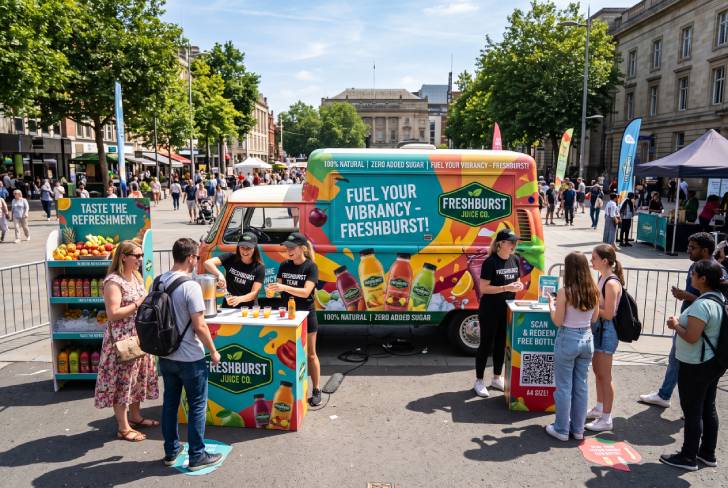
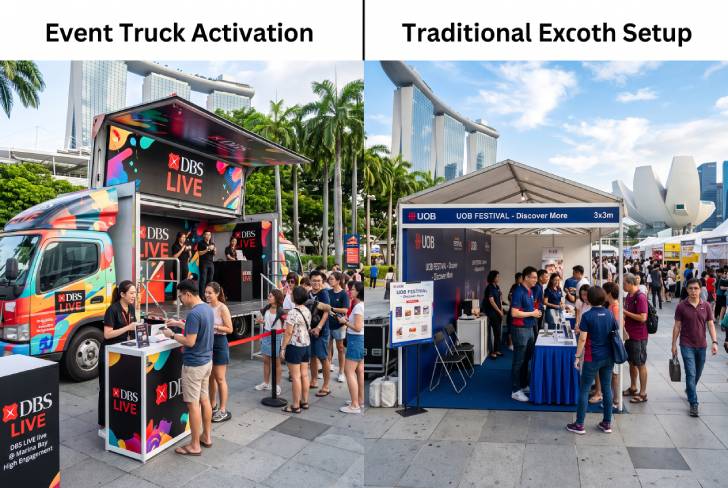
Attention can come from booth design, campaign colours, product displays, lighting, promoters, event trucks, interactive elements, or a strong visual message.
However, attention is only the starting point. If customers notice the campaign but do not understand it, the opportunity may be lost.
Action Gives the Campaign Purpose
Action is what turns attention into a more meaningful result.
A customer action does not always need to be a purchase. It can be any step that moves the customer closer to the brand. This may include product trial, QR registration, voucher redemption, survey participation, social media follow, consultation booking, or sales enquiry.
A good activation campaign should make the next action clear and easy.
If the campaign attracts many people but few take action, the brand may get visibility without useful engagement. A strong campaign should guide customers from interest to participation.
Why Attention Alone Is Not Enough
Some campaigns focus heavily on looking attractive. They may have a beautiful setup, colourful visuals, or a large display, but customers may still leave quickly if the purpose is unclear.
Attention without action can create a campaign that looks busy but does not deliver strong value.
For example, customers may take photos of a nice setup but never learn about the product. They may accept a free gift but forget the brand. They may look at the booth but not know where to start.
Attention opens the door, but action moves customers through the experience.
Why Action Without Attention Can Also Fail
A campaign may have a good product trial, useful QR journey, or strong offer, but if customers do not notice it, fewer people will participate.
This is why the campaign still needs visibility. The activity, offer, or product benefit should be easy to see from the customer’s walking direction.
A strong campaign should make the action visible. Customers should be able to understand that there is something worth joining before they are directly approached by a promoter.
When action is hidden, the campaign depends too much on promoters to pull people in.
The Message Should Connect Attention to Action
The campaign message plays an important role in connecting attention and action.
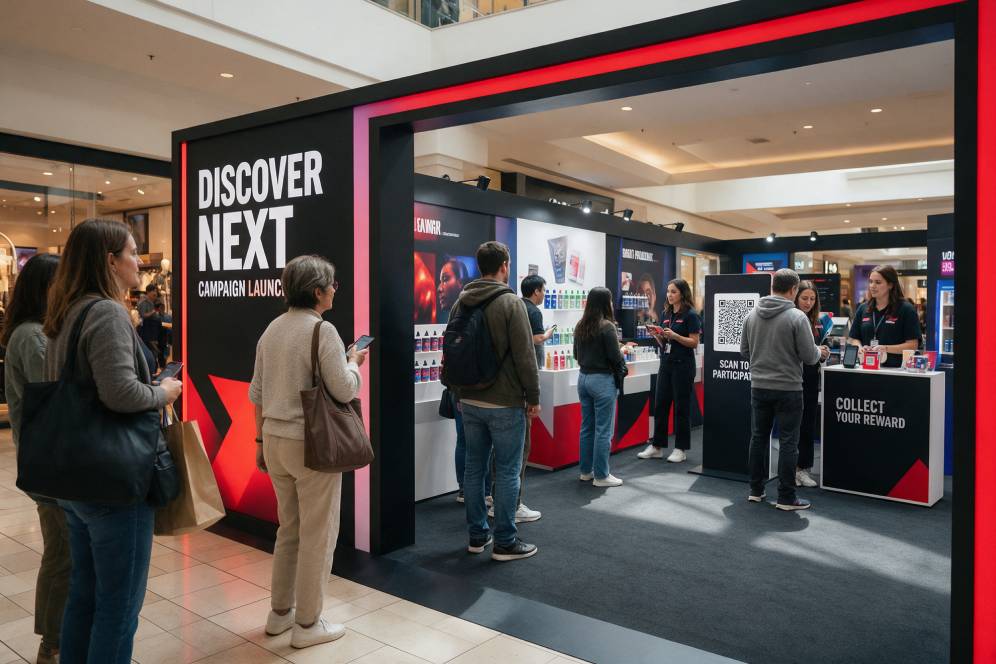
A clear message should quickly explain what the campaign is about and what customers should do next. This may be something simple like “Try the new flavour,” “Scan to redeem your voucher,” or “Get a quick product recommendation.”
The message should be visible on signage, product displays, digital screens, and promoter scripts.
The Attention Message
This helps customers notice the campaign and understand the main idea.
The Action Message
This tells customers what step to take after they become interested.
When both messages work together, the campaign feels clearer and easier to join.
Promoters Help Move Customers from Interest to Participation
Promoters are often the bridge between attention and action.
A customer may notice the campaign, but a promoter can help explain the offer, invite participation, answer questions, and guide the next step.
Promoters should be trained to do more than attract customers. They should understand the campaign objective, product benefit, customer flow, reward rules, QR process, and final call-to-action.
A friendly and informed promoter can turn a short moment of interest into a meaningful interaction.
Activities Should Support the Desired Action
Interactive activities can attract customers, but they should support the campaign goal.
A game, quiz, sample trial, demo, photo moment, or QR redemption should not feel random. It should help customers understand the product, remember the message, or move closer to the next action.
For example, a product sampling activity can lead to a voucher redemption. A quiz can educate customers about product benefits. A consultation can lead to an enquiry. A photo moment can support social sharing.
The activity should make the desired action feel natural.
Digital Touchpoints Help Capture Action
Digital touchpoints are useful because they help brands continue the customer journey after the live interaction.
These may include QR codes, landing pages, online forms, digital vouchers, WhatsApp enquiries, social media pages, app downloads, or surveys.
However, they should be simple and clearly connected to the campaign benefit. Customers should know why they are scanning and what they will receive.
Digital touchpoints work best when they reduce friction, not when they add extra steps without clear value.
Customer Flow Should Make Action Easy
Even if the campaign is attractive, customers may not participate if the customer flow is confusing.
Customers should know where to enter, where to speak with a promoter, where to try the product, where to scan, where to redeem, and where to exit.
If too many steps happen in one crowded area, customers may feel uncomfortable. If the action point is hidden, they may miss it completely.
A smooth customer flow makes the campaign feel organised and helps customers complete the desired action more easily.
Rewards Should Encourage the Right Behaviour
Rewards can motivate participation, but they should be planned carefully.
A random giveaway may attract people, but it may not support the campaign goal. A relevant reward encourages the right customer behaviour.
For example, a product sample supports trial. A voucher encourages future purchase. A product guide supports education. A consultation offer encourages enquiry.
The reward should make sense for the customer and the brand. This helps the action feel more meaningful.
Results Should Be Reviewed Beyond Crowd Size
A campaign with many visitors may look successful, but crowd size is not the only measurement.
Brands should also look at product trials, QR scans, leads collected, vouchers redeemed, enquiries received, customer questions, promoter feedback, and follow-up actions.
This helps brands understand whether the campaign attracted attention and created useful action.
The best activation agency in Singapore reviews both sides because visibility without action may not create long-term value.
Why the Right Activation Agency Matters
A reliable activation agency helps brands plan attention and action together.
This includes campaign concept, visual setup, message clarity, promoter briefing, activity design, customer flow, digital touchpoints, reward planning, and post-campaign review.
For roadshows, product launches, sampling campaigns, retail activations, mobile event spaces, event truck campaigns, and interactive brand experiences, this balance can make the activation more effective.
The right agency does not only ask how to make people look. It also asks how to help customers participate, understand, and take the next step.
Conclusion
A strong brand activation needs both attention and action.
Attention helps customers notice the campaign. Action helps customers participate, understand the brand, and move closer to a meaningful result.
The best activation agency in Singapore looks at both because a successful campaign should not only attract people. It should guide them clearly from first interest to product trial, QR scan, voucher redemption, enquiry, or follow-up.
When attention and action work together, the campaign becomes more than a visual setup. It becomes a customer experience that supports real brand engagement.