Modern brand campaigns are no longer limited to either offline or online marketing. Customers may first notice a brand through a physical roadshow, scan a QR code during the experience, join a digital game, receive an online voucher, and later continue engaging with the brand through social media or email.
This is why many brands now look for ways to combine physical and digital engagement. A live campaign gives customers a real-world experience, while digital tools help extend the interaction, collect data, measure participation, and continue the conversation after the event.
An experienced event agency in Singapore helps brands connect these two sides. Instead of treating digital features as separate add-ons, the agency plans how physical and digital touchpoints can work together as one complete customer journey.
Why Physical and Digital Engagement Work Better Together
Physical engagement allows customers to see, touch, try, and experience a brand in person. This is especially useful for product demonstrations, sampling campaigns, roadshows, retail activations, and face-to-face conversations.
Digital engagement adds another layer. It allows brands to capture leads, track participation, personalise experiences, encourage social sharing, and guide customers towards the next action.
When both are planned properly, the campaign becomes more complete. The physical setup attracts attention and builds trust, while the digital element makes the interaction easier to measure and continue.
For example, a customer may try a product at a roadshow, scan a QR code to claim a reward, answer a short survey, and receive a follow-up promotion. The experience begins offline but continues digitally.
Starting with the Campaign Objective
Before choosing any digital tool, the event agency must understand what the brand wants to achieve.
Some campaigns are designed to build awareness. Others focus on product trials, customer education, lead generation, app downloads, social sharing, or retail conversion. The digital engagement method should support the campaign objective instead of being used only because it looks modern.
If the goal is to collect leads, the campaign may need QR registration or a digital form. If the goal is to increase participation, a simple interactive game may work better. If the goal is product education, a touchscreen display or digital product guide may help customers explore information at their own pace.
A good event agency in Singapore helps brands choose tools that match the objective, audience, location, and campaign flow.
Using QR Codes to Connect Offline Visitors to Online Actions
QR codes are one of the simplest ways to connect physical and digital engagement. They are easy to use, familiar to most customers, and suitable for many campaign formats.
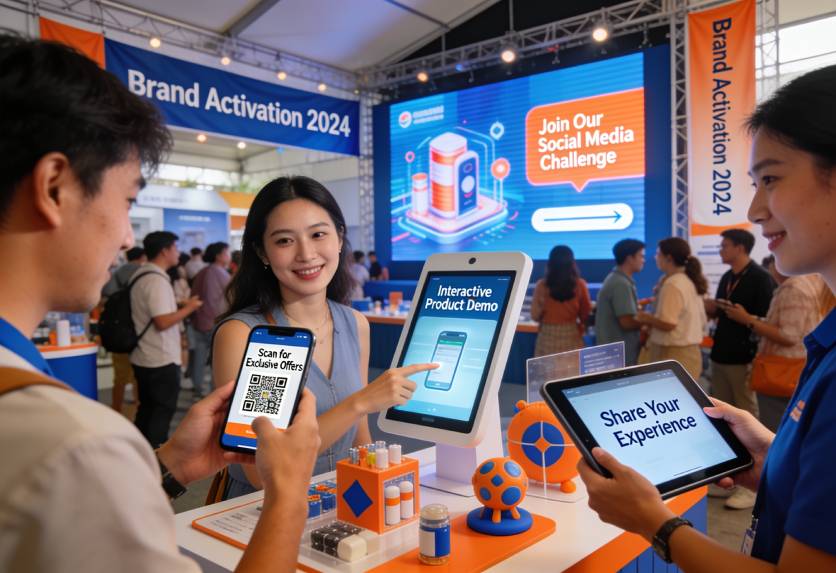
At a live campaign, QR codes can be used for registration, lucky draws, product information, surveys, app downloads, voucher redemption, membership sign-ups, or social media actions.
However, QR codes should not be placed randomly around the booth without a clear reason. Customers need to understand why they should scan. The benefit should be simple and visible, such as “Scan to redeem a sample,” “Scan to join the lucky draw,” or “Scan to receive your exclusive offer.”
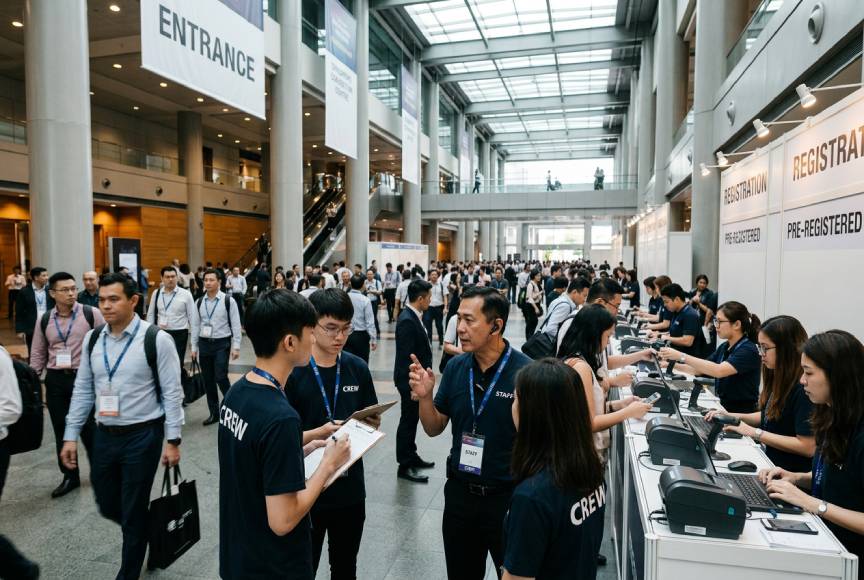
The physical team also plays an important role. Promoters can explain the QR activity, guide customers through the steps, and help reduce drop-offs.
Interactive Screens Make Product Information More Engaging
Physical displays are useful, but they can become crowded when there is too much information. Interactive screens help brands present product details, videos, comparisons, or campaign stories in a more engaging way.
Instead of reading a long brochure, customers can tap through product categories, watch short videos, answer questions, or receive personalised recommendations.
This is helpful for brands with multiple product options or services. A customer can explore the content that is most relevant to them, while promoters can continue the conversation based on what the customer selects.
Interactive screens can also make the campaign feel more premium and dynamic, especially when used together with a well-designed booth or roadshow setup.
Digital Games Encourage Participation
Digital games are commonly used in roadshows and brand activations because they give customers a clear reason to stop and participate.
The game does not have to be complicated. A quick spin-and-win activity, product quiz, memory challenge, reaction game, or digital lucky draw can create excitement without taking too much time.
For the best result, the game should connect back to the brand message. For example, a health product campaign may use a quiz about daily wellness habits, while a food brand may create a game around flavour preferences.
The event agency should also plan what happens after the game. Customers may receive a sample, digital voucher, product recommendation, or invitation to learn more. This keeps the activity connected to the campaign objective.
Social Media Extends the Campaign Beyond the Event Space
A physical campaign usually reaches people who are present at the location. Social media can help extend the campaign reach beyond that space.
Event agencies may include photo booths, branded backdrops, shareable video moments, hashtags, digital filters, or social media challenges to encourage visitors to create and share content.
This works best when the content feels natural and enjoyable. If the photo or video looks too much like an advertisement, customers may be less willing to share it. A more effective approach is to create a fun, useful, or visually attractive moment that includes the brand in a balanced way.
Social media engagement can also support campaign visibility after the roadshow ends, especially when combined with influencer visits, user-generated content, or follow-up posts from the brand.
Digital Lead Collection Makes Follow-Up Easier
Many on-ground campaigns aim to collect customer details for future follow-up. In the past, this may have involved paper forms, manual data entry, or scattered name lists.
Digital lead collection makes the process more organised. Customers can submit their details through QR forms, tablets, campaign microsites, or registration systems.
This helps brands collect cleaner information and reduce manual errors. It also makes it easier to sort leads, send follow-up messages, track interest, or measure campaign results.
However, the form should remain short and relevant. Asking for too much information can reduce completion rates. The event agency should help the brand balance data needs with customer convenience.
Digital Surveys Help Brands Understand Customer Response
Live campaigns are a good opportunity to collect customer feedback while the experience is still fresh.
A short digital survey can help brands understand product interest, customer preferences, campaign response, and areas for improvement. Surveys can be completed after product sampling, demonstrations, games, or consultations.
The survey should be simple and quick. Customers are more likely to respond when the questions are easy to answer and the purpose is clear.
For example, after trying a product, customers may answer a few questions about taste, packaging, purchase interest, or preferred retail location. This gives the brand useful insights while keeping the experience smooth.
Mobile Event Campaigns Benefit from Digital Engagement
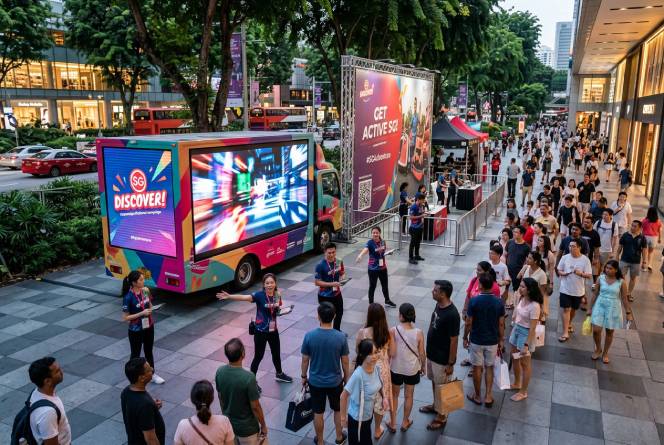
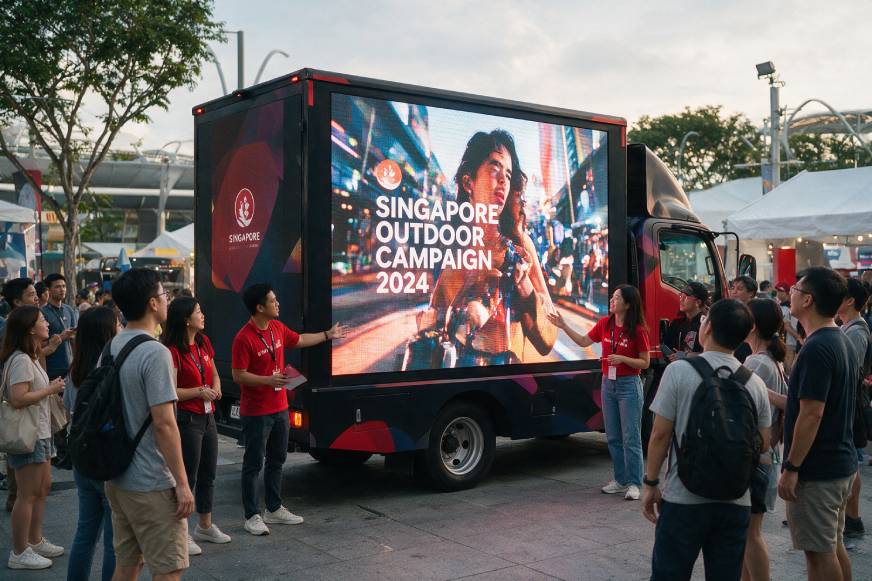
Mobile event campaigns are useful when brands want to reach different locations instead of staying in one fixed space. Event trucks, LED trucks, Kombi vans, and mobile roadshow setups can bring the campaign closer to customers.
Digital engagement makes mobile campaigns even more effective. A mobile event truck can use QR codes for registration, LED screens for campaign messaging, digital games for participation, and online vouchers for follow-up.
Because mobile campaigns may move across different areas, digital tools help maintain consistency. The same QR journey, game mechanics, survey, or digital content can be used across multiple locations.
This allows the brand to compare results from different areas and understand which locations generated stronger engagement.
Combining Digital Tools with Human Interaction
Digital engagement should not replace face-to-face communication. In many cases, the strongest campaign experience comes from combining both.
Promoters help explain the activity, introduce the product, answer questions, and guide customers through the next step. Digital tools support the experience by making participation more interactive and measurable.
For example, a touchscreen quiz may help identify the customer’s interest, but a promoter can use that result to explain a suitable product. A QR registration form may collect customer details, but a friendly conversation can build trust and encourage stronger interest.
An event agency in Singapore should plan both the technology and the human role clearly so the campaign feels smooth rather than disconnected.
Measuring Campaign Performance More Clearly
One advantage of combining physical and digital engagement is better measurement.
A physical campaign can generate strong customer interaction, but without digital tracking, it may be harder to understand the results. Digital tools allow brands to measure participation more clearly.
Depending on the campaign, brands may track QR scans, form submissions, game participants, voucher redemptions, app downloads, survey responses, social shares, product interest, and customer feedback.
These results can be reviewed together with on-site observations. For example, promoters may notice that customers were interested in a certain product feature, while digital data may show which offer received the most scans.
Together, these insights help brands improve future campaigns.
Keeping the Experience Simple
While digital tools can improve engagement, adding too many features can make the campaign confusing.
A customer should not need to scan multiple codes, complete several forms, join a game, answer a survey, and follow several social pages just to receive one small reward. The more complicated the process becomes, the more likely customers are to drop off.
The event agency should simplify the journey. Each digital touchpoint should have a clear purpose and connect naturally with the physical experience.
A strong campaign may only need one or two digital elements if they are well planned. The goal is not to use as much technology as possible, but to use the right technology to support the campaign.
Why the Right Event Agency Matters
Combining physical and digital engagement requires planning, not just equipment.
The right event agency should understand campaign strategy, customer flow, booth design, manpower coordination, digital tools, data collection, and on-site execution. The agency should also know how to make the experience practical for the location, audience, and campaign duration.
For brands in Singapore, this matters because on-ground campaigns often happen in busy malls, retail stores, business districts, heartland areas, outdoor spaces, and mobile locations. The digital experience must work smoothly in real conditions, not only in planning documents.
A reliable agency can help the brand decide which digital tools are useful, how to connect them with the physical setup, and how to measure the results after the campaign.
Conclusion
Physical and digital engagement work best when they are planned as one connected experience.
The physical campaign creates attention, trust, product interaction, and face-to-face engagement. Digital tools support the journey by encouraging participation, collecting leads, extending reach, personalising experiences, and measuring results.
An experienced event agency in Singapore helps brands bring these elements together through QR activities, interactive screens, digital games, social media moments, surveys, lead collection, and mobile campaign support.
When the online and offline experience feels connected, customers are more likely to participate, remember the brand, and take the next step after the campaign.