Practical brand activation ideas include product sampling, personalised consultations, product-linked games, useful photo experiences, community workshops, customisation stations and mobile pop-ups. Choose the idea around the audience’s interests, one product benefit and a clear next action, such as a completed trial, qualified enquiry or redemption.
For a Singapore mall, campus, workplace or retail campaign, match the activity to the time the audience has, the venue’s access conditions and the team available to run it. The concepts below are planning options, not fixed packages or promised results.
7 brand activation ideas to compare
| Activation idea | Audience experience | What to measure |
|---|---|---|
| 1. Sample and discover | Try a product, answer one useful preference question and find the relevant range. | Completed trials and feedback responses, counted separately. |
| 2. Personalised discovery bar | Have a short consultation or guided comparison based on a stated need. | Completed consultations and relevant next-step enquiries. |
| 3. Product challenge and leaderboard | Demonstrate a product benefit through a short challenge; offer an optional scorecard. | Unique participants, completions and repeat plays. |
| 4. A useful photo experience | Create a portrait or branded scene the audience has a reason to keep and share. | Photo sessions, downloads and trackable public shares. |
| 5. Community workshop | Bring an interest group together for a hands-on activity linked to the brand story. | Bookings, attendance and completed activities. |
| 6. Customisation station | Personalise a product, accessory or take-home item within a clear set of options. | Completed items, queue time and purchase-linked redemptions. |
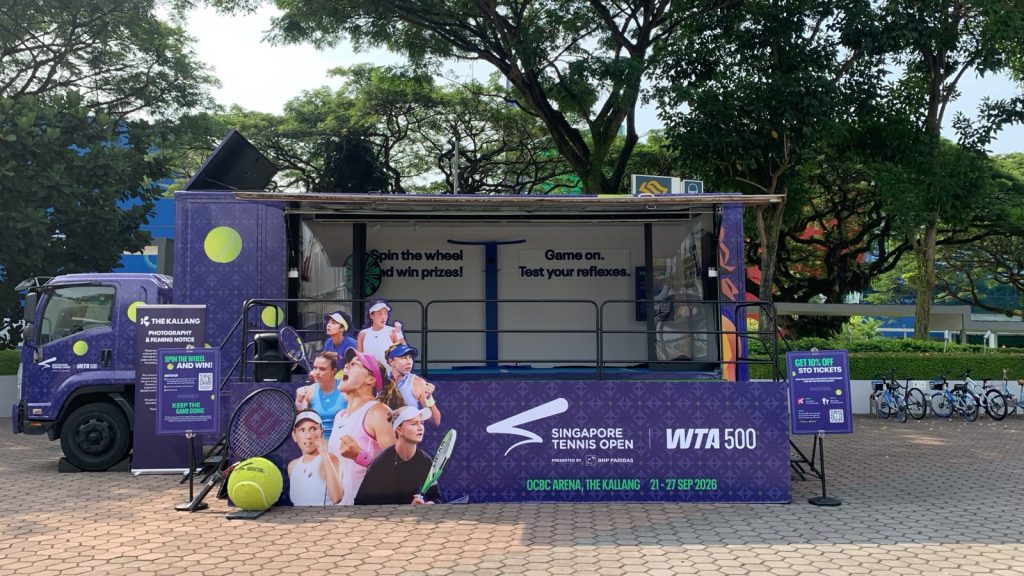
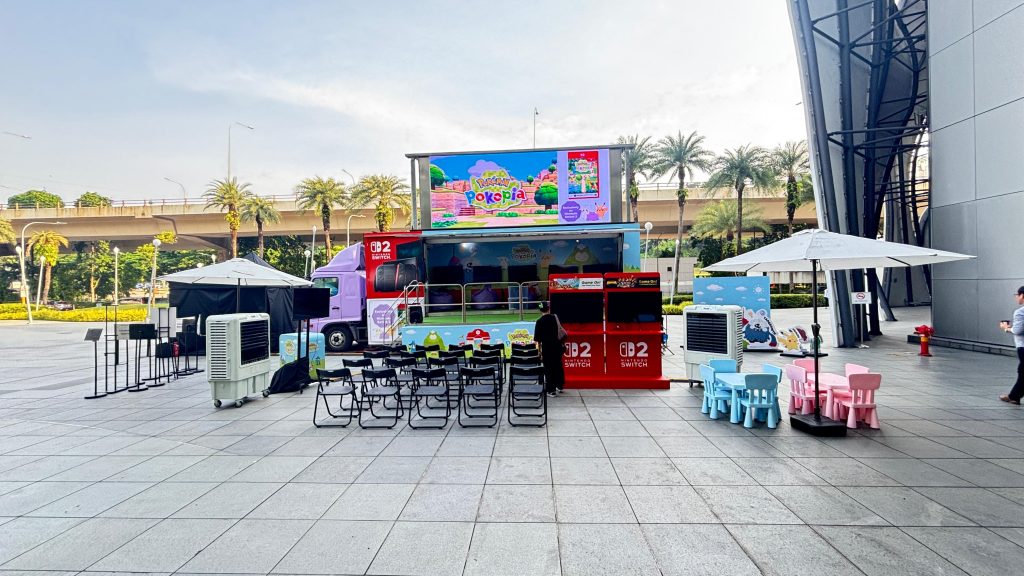
| 7. Mobile pop-up discovery | Take a demonstration, tasting or interactive experience to several suitable locations. | Interactions and outcomes by location, using the same definitions. |
Singapore campaign examples behind the ideas
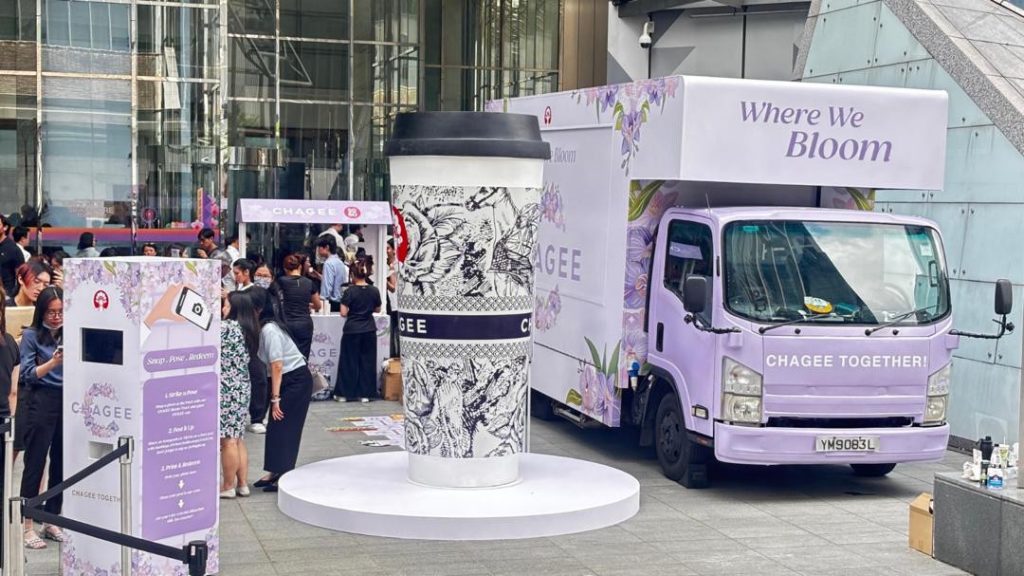
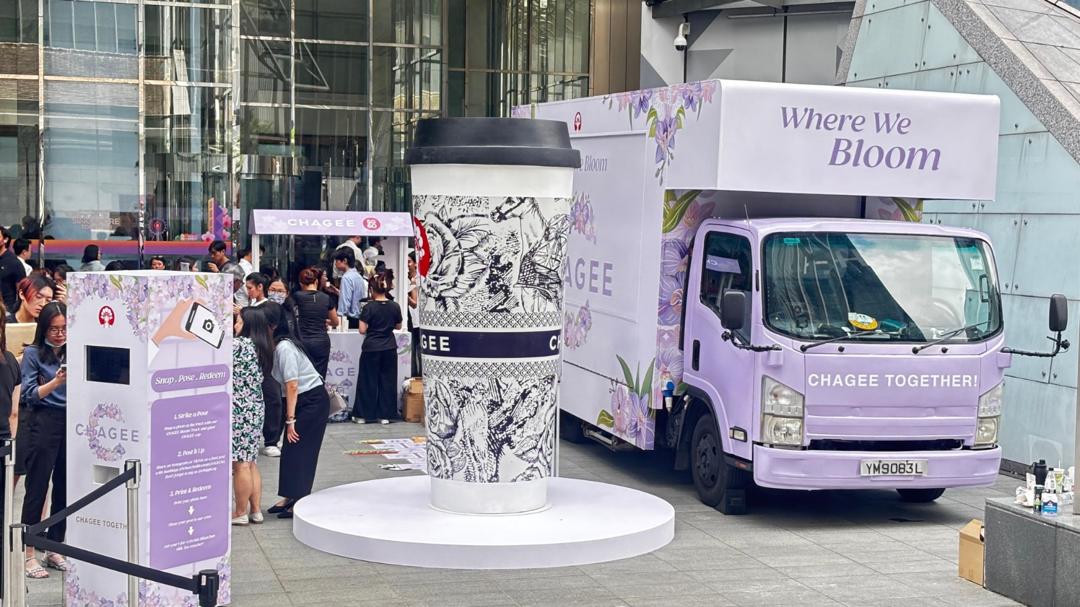
- CHAGEE’s Where We Bloom activation combined tea sampling, a hopscotch challenge and photo moments: an example of product discovery connected with fun participation.
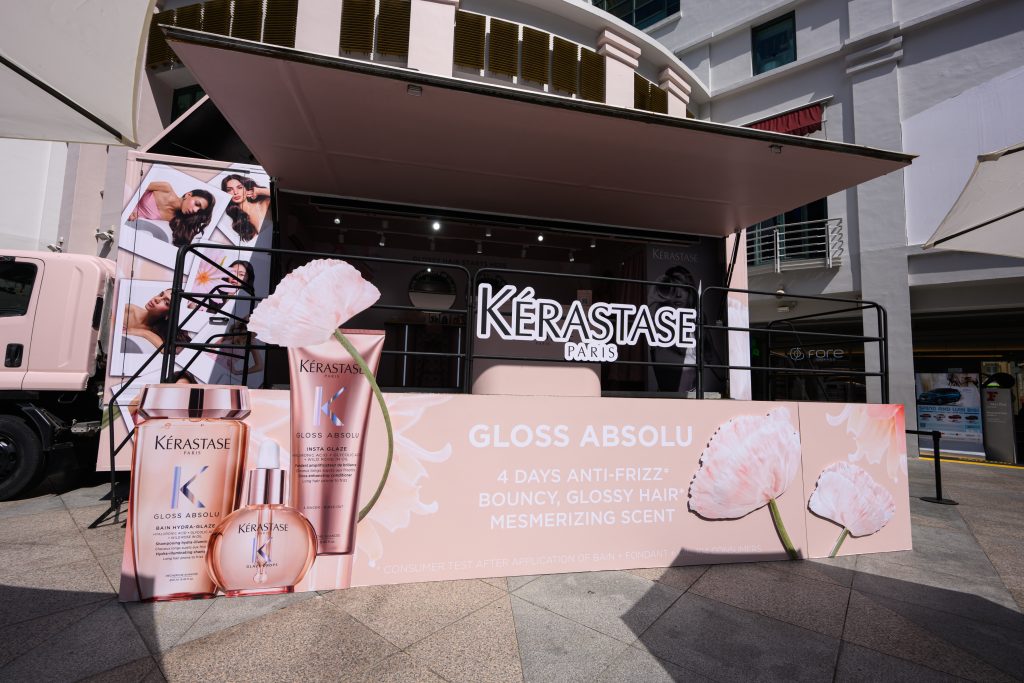
- Kérastase Gloss Absolu brought together product demonstrations, scalp scans, a matching game and sample redemption.
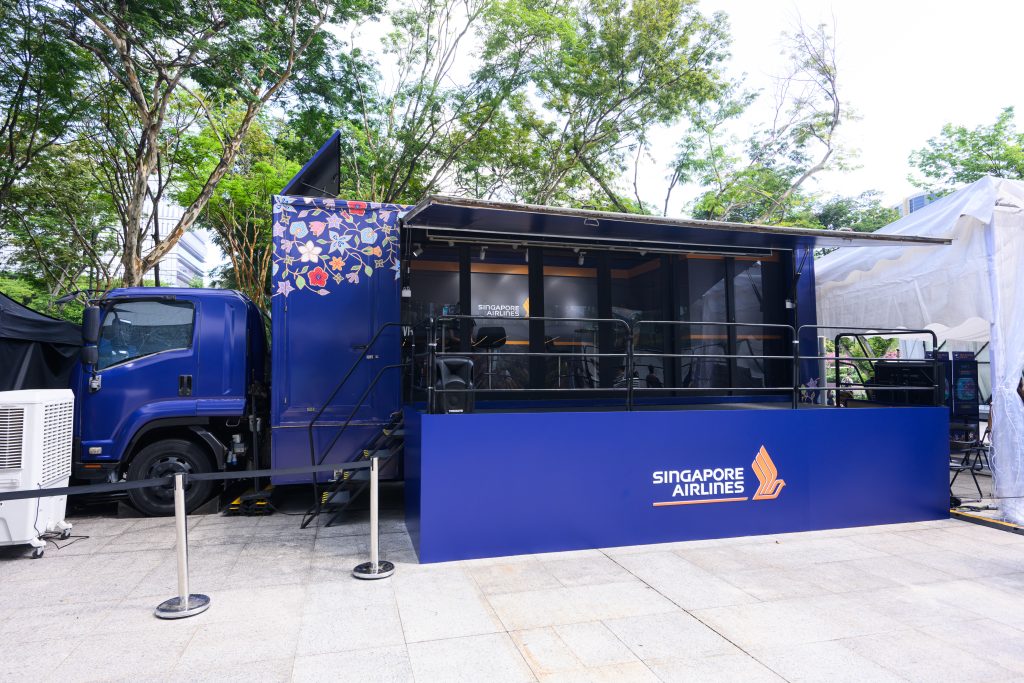
- Singapore Airlines’ recruitment roadshow used interactive discovery and career conversations at Plaza Singapura, showing how an activation idea can support a recruitment objective.
Unicom Marketing connects the creative concept with production, staffing and delivery. Explore our brand activation services in Singapore, or compare retail activation and pop-up ideas when a temporary experience space is part of the brief.
Simple Does Not Mean Basic
A simple activation idea is not the same as a plain or low-effort campaign.
Simple means the customer journey is clear. Customers know what the campaign is about, what they can do, and what they will receive after participating. The idea may be easy to join, but it still needs proper planning, design, promoter briefing, and execution.
For example, a product sampling campaign may look simple, but it still requires the right display, clear messaging, hygiene planning, sample control, promoter explanation, and follow-up offer.
A QR redemption activity may seem straightforward, but it needs a smooth scanning process, short form, clear reward, and working digital setup.
Simple campaigns work best when they are intentionally planned, not when important details are ignored.
Customers Prefer Experiences They Can Understand Quickly
In live campaigns, attention is limited. Customers may be walking past, shopping, rushing to lunch, or moving through a crowded area. They may not have time to figure out a complicated activity.
A simple activation allows customers to understand the offer almost immediately. They can quickly see the product, read the message, speak to a promoter, and decide whether to participate.
This helps reduce hesitation. When the steps are clear, customers feel more comfortable joining. When the process looks confusing, they may avoid the campaign even if the reward is attractive.
A good activation should quickly answer these questions:
- What is this campaign about?
- Why should I stop?
- What do I need to do?
- What happens after I join?
When these answers are clear, engagement becomes much easier.
Simple Ideas Make Participation Easier
Customer engagement improves when the campaign is easy to join.
A short product demo, quick sample tasting, simple game, scan-and-redeem mechanic, or one-question survey can invite participation without making customers feel pressured. These formats are especially useful in high-traffic areas where people may only have a short amount of time.
If the activity requires too many instructions, long waiting times, or multiple steps before customers receive value, participation may drop.
Simple activation ideas respect the customer’s time. They create an entry point that feels low-pressure and easy to complete. Once customers have joined, promoters can continue the conversation and introduce the brand more naturally.
Clear Messaging Helps the Brand Stay Memorable
A complicated campaign can sometimes weaken the brand message. Customers may remember the activity but forget what product or brand it was connected to.
Simple activation ideas make it easier to keep the message focused. Instead of trying to communicate every product feature, the campaign can highlight one key benefit or one main action.
For example, a beverage brand may focus on “try the new flavour today.” A skincare brand may focus on “find the product for your skin concern.” A technology brand may focus on “see how it works in one minute.”
When the message is simple, promoters can explain it more clearly, visuals can support it better, and customers are more likely to remember it.
Simple Activities Can Still Feel Engaging
Choose an activity by the customer action you want to encourage. These are planning ideas, not fixed campaign packages:
- One-product demonstration: Show one useful feature, then invite the customer to try it. Track completed demonstrations and the questions people ask.
- Sample and one-question feedback: Offer a suitable product trial and ask one focused question, such as which flavour the customer preferred. Keep sample counts and feedback responses separate.
- A product-linked quiz: Use a short question to introduce a product benefit, then explain the answer. Measure completions rather than treating every passer-by as a participant.
- A useful photo moment: Give the audience a reason to want the photograph beyond the logo. Plan the photo queue, delivery method and any permission needed for brand reuse.
- Scan for a relevant next step: Link directly to a product guide, store finder or redemption page. Test the mobile page and provide a staff-assisted alternative if the scan fails.
Connect the activity to a real audience need
In Unicom’s account of G2000’s March 2017 campaign, a mobile truck visited NTU, NUS and SIM. Participants received a mini-makeover with L’Oréal Paris, wore G2000 blazers and received a CV photo. The wider campaign included other activities, but this element offers a useful planning lesson: connect participation to something the audience can use.
For forms that collect personal data, explain the purpose before collection and plan marketing consent carefully. Refer to the PDPC’s notification guidance when preparing the customer journey.
See brand activation options to connect the activity with the wider campaign setup.
Promoters Can Make Simple Ideas More Effective
Promoters are important in simple activation campaigns because they help create the human connection.
A simple idea becomes stronger when the promoter knows how to invite customers naturally, explain the benefit, and guide the next step. A friendly promoter can turn a short interaction into a useful conversation.
For example, after giving a sample, the promoter can explain one key product benefit. After a customer joins a quiz, the promoter can recommend a suitable product. After a QR redemption, the promoter can remind the customer how to use the voucher.
The idea may be simple, but the promoter helps make it meaningful.
This is why promoter briefing matters. The team should understand the campaign message, participation flow, product details, customer questions, and final call-to-action.
Simple Campaign Flow Reduces Confusion
Customer flow is easier to manage when the campaign idea is simple.
The customer journey may be as straightforward as notice the campaign, speak to a promoter, try the product, scan a QR code, and redeem a reward. Because the journey is short and clear, customers are less likely to feel lost.
This also helps the event team manage queues, stock, activity timing, and customer movement. When each step is easy to follow, the campaign can handle higher traffic more smoothly.
A simple flow is especially useful for roadshows, retail activations, mall campaigns, and mobile event spaces where the campaign may need to serve many customers within a limited period.
Simple Ideas Are Easier to Adapt Across Locations
Many brand activations run across multiple locations. A campaign may appear in one mall today, a heartland area tomorrow, and a mobile roadshow location next week.
Simple activation ideas are easier to repeat and adapt. The core message, activity, promoter script, and customer journey can remain consistent even when the physical space changes.
This helps maintain campaign quality. If the idea is too complex, each location may require heavy adjustment, which increases the risk of confusion or inconsistent execution.
For brands planning multi-location activations, simplicity can help create a more reliable customer experience.
Digital Tools Should Keep the Experience Simple
Digital elements can make activation campaigns more engaging and measurable, but they should not make the experience harder.
QR codes, online forms, digital games, surveys, and interactive screens should be quick and easy to use. If customers need to wait for a slow page, complete a long form, or follow too many digital steps, they may lose interest.
A simple digital journey works better. For example, customers scan one QR code, complete a short form, receive a reward, and get a follow-up offer.
The purpose of digital tools should be to support engagement, not complicate it.
Simple Ideas Can Support Stronger Campaign Results
Simple activation ideas can improve results because they reduce friction.
When customers understand the campaign quickly and can participate easily, more people are likely to engage. This can support product trials, sample distribution, QR scans, lead collection, voucher redemption, survey responses, social follows, and sales enquiries.
Simple campaigns also make it easier to measure what worked. If the activity flow is clear, the brand can better understand where customers participated, where they dropped off, and what should be improved next time.
A simple idea with strong execution can often perform better than a complicated campaign that customers do not fully understand.
When More Complex Ideas May Be Useful
Simple does not mean every campaign must be small or minimal.
Some campaigns may need more advanced concepts, especially for large product launches, immersive brand experiences, high-value products, media events, or interactive technology campaigns.
However, even complex campaigns should have a simple customer journey. Customers should still understand what they are seeing, how to participate, and what action to take next.
The best approach is to make the campaign feel impressive while keeping the experience easy to follow.
Why the Right Activation Agency Matters
A reliable activation agency in Singapore helps brands decide when to keep an idea simple and when to add more layers.
The agency can help simplify messaging, design the participation flow, choose suitable activities, brief promoters, plan roadshow or mobile setups, coordinate digital tools, and manage on-site execution.
The goal is not to remove creativity. It is to make creativity easier for customers to engage with.
For brands, this support is useful because activation campaigns must work in real environments with real customer behaviour. A good idea must not only look good in a proposal. It must also be easy for people to join during the live campaign.
Conclusion
Simple activation ideas often work best for customer engagement because they are easier to understand, easier to join, and easier to remember.
Customers in busy Singapore locations may not have time for complicated campaign mechanics. A clear message, friendly promoter, simple activity, smooth customer flow, relevant reward, and easy next step can create strong engagement without overwhelming the audience.
An experienced activation agency in Singapore helps brands turn simple ideas into effective campaign experiences through proper planning and execution.
When the campaign is clear and customer-friendly, people are more likely to stop, participate, understand the brand, and take the next step.
Brand activation ideas: common questions
What is a brand activation idea?
A brand activation idea is a concept that invites an audience to experience a product or brand and take a defined next step. A useful idea connects the brand message, the audience’s interest and an activity that can be delivered and measured.
Which activation ideas suit a limited budget?
Start with one guided product trial, a short product quiz, a useful photo experience or a small consultation counter. Compare the full cost of space, production, staffing, equipment and stock. A smaller experience with a clear purpose can be more practical than combining several unrelated activities.
How do I choose an activation idea for Singapore?
Set the objective first, then identify the audience, suitable location, interaction time and next action. Check venue access, activity rules, queue space, power and staffing before confirming the creative concept. Measure completed interactions separately from estimated exposure.
Can a pop-up be a brand activation?
Yes. A pop-up becomes a brand activation when it invites participation, such as trying a product, joining a demonstration or attending a workshop. The pop-up is the temporary setting; the activation idea explains what the audience does there. Compare our pop-up and retail activation ideas for format options.
To develop a campaign, send Unicom Marketing a brief with the objective, audience, dates, locations and budget range.