Planning a roadshow campaign in Singapore is not just about booking a space, setting up a booth, and waiting for people to walk over. A successful roadshow needs clear objectives, the right location, engaging activities, trained staff, strong visuals, and proper follow-up.
For brands, roadshows can be one of the most effective ways to meet customers face-to-face. They allow people to experience your product, ask questions, join activities, receive samples, scan QR codes, sign up for offers, or interact with your brand in real time.
That is why many businesses choose to work with a roadshow agency in Singapore when planning campaigns that need strong on-ground visibility and customer engagement.
Whether you are launching a product, promoting a service, collecting leads, or building brand awareness, the planning stage will decide how well your roadshow performs.
Here is a step-by-step guide to planning a successful roadshow campaign in Singapore.
1. Start with a Clear Campaign Objective
Before choosing a location or designing the setup, you need to define what the roadshow should achieve.
A roadshow without a clear objective may look busy, but it may not produce meaningful results. For example, a campaign designed for brand awareness will be different from a campaign designed for sales conversion or lead generation.
Common roadshow objectives include:
- Increasing brand awareness
- Launching a new product
- Promoting a seasonal campaign
- Collecting customer leads
- Driving product trials
- Generating enquiries
- Encouraging sign-ups
- Supporting retail sales
- Educating customers
- Creating social media engagement
Once the objective is clear, every part of the campaign becomes easier to plan. The location, setup, manpower, script, engagement activity, and measurement method should all support the main goal.
For example, if the goal is product trial, the roadshow should focus on sampling and product demonstration. If the goal is lead generation, the setup should make QR registration or form submission simple and attractive.
2. Understand Your Target Audience
A successful roadshow is built around the audience, not just the brand.
Before planning the campaign, ask who you want to reach. Are they working professionals, families, students, shoppers, tourists, homeowners, parents, or business owners?
Different audiences behave differently.
For example, working professionals may prefer a quick and direct engagement during lunch hours. Families may spend more time at weekend roadshows if the activity is fun and child-friendly. Shoppers may respond better to demonstrations, discounts, or product trials.
Understanding your audience helps you plan:
- The right location
- The best campaign timing
- The tone of communication
- The type of activity
- The manpower required
- The campaign message
- The offer or call-to-action
A roadshow should feel relevant to the people passing by. If the message does not match the audience, even a good setup may not perform well.
3. Choose the Right Roadshow Location
Location is one of the most important factors in roadshow planning.
Singapore has many possible roadshow locations, but not every location is suitable for every campaign. A high-footfall area may look attractive, but if the audience does not match your target market, the results may be weak.
Possible roadshow locations include:
- Shopping malls
- Business districts
- Heartland areas
- Outdoor event spaces
- Community areas
- Retail entrances
- Campuses
- Exhibition areas
- Public engagement zones
- Partner locations
When choosing a location, consider:
- Does the audience match your target market?
- Is the foot traffic strong during your campaign timing?
- Is there enough space for the setup?
- Are there restrictions on sound, sampling, displays, or sales activity?
- Is the area suitable for queue flow?
- Will people have enough time to stop and engage?
- Can the location support your activation format?
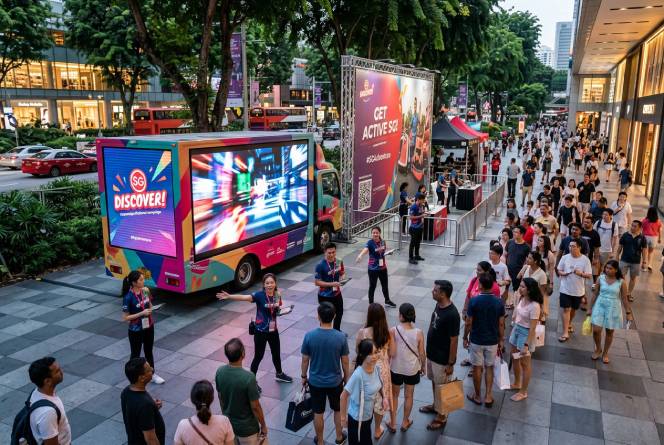
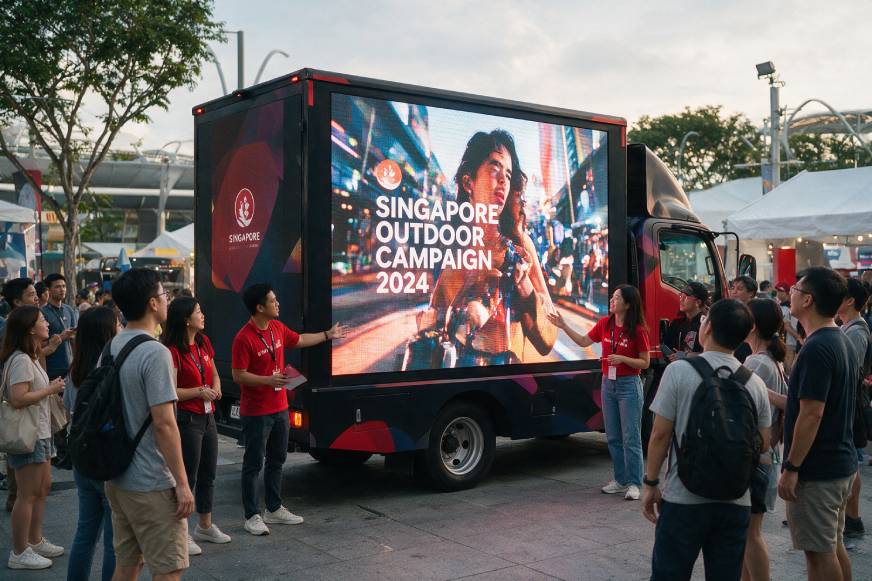
For brands using mobile event spaces or event trucks, location planning becomes even more important. The site must allow proper vehicle access, parking, setup, safety clearance, and audience flow.
A good location does not only bring traffic. It brings the right traffic.
4. Decide Whether You Need a Fixed Booth or Mobile Event Space
Traditional roadshows often use fixed booths or temporary event setups. These can work well in malls, retail spaces, or indoor venues.
However, some campaigns need more flexibility and visibility. In these cases, mobile event spaces can be a strong option.
Mobile event spaces may include:
- Mobile event trucks
- Kombi vans
- LED trucks
- LED trailers
- Event buses
- Branded vehicles
A mobile event truck in Singapore can be used as a mobile showroom, product display space, sampling booth, pop-up store, or roadshow platform. It allows your campaign to move across different locations instead of staying in one fixed venue.
Mobile event spaces are useful when your brand wants to:
- Reach multiple locations
- Create stronger visual impact
- Stand out in outdoor areas
- Bring the campaign closer to the audience
- Create a more immersive experience
- Use the vehicle as part of the campaign attraction
A fixed booth may be enough for a simple campaign. But if your brand needs mobility, attention, and flexibility, a mobile roadshow setup may be more suitable.
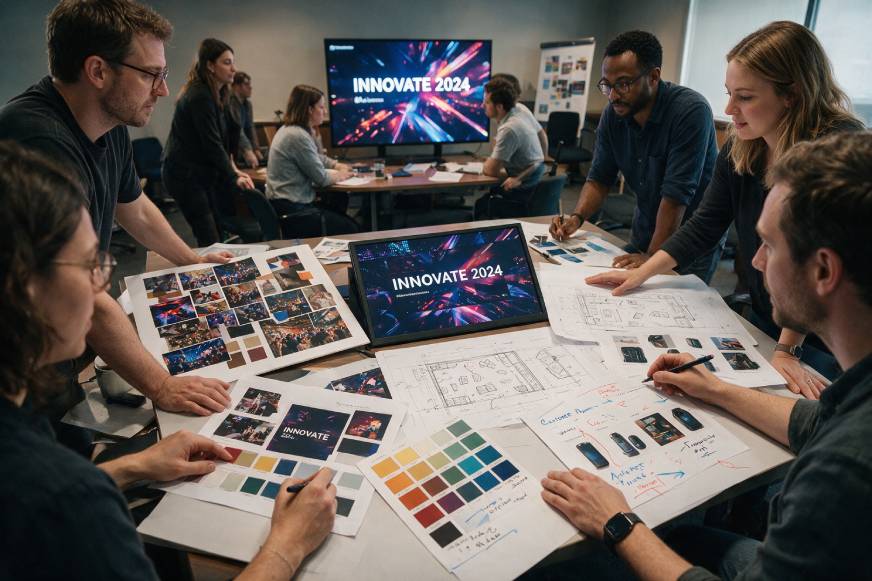
5. Create a Strong Campaign Concept
A roadshow needs a concept that people can understand quickly.
Customers often decide within seconds whether they want to stop or walk away. Your campaign setup should clearly communicate who you are, what you are offering, and why people should engage.
A strong campaign concept may include:
- A clear visual theme
- A simple campaign message
- Product display areas
- Sampling counters
- Demonstration zones
- Interactive games
- Digital screens
- Photo opportunities
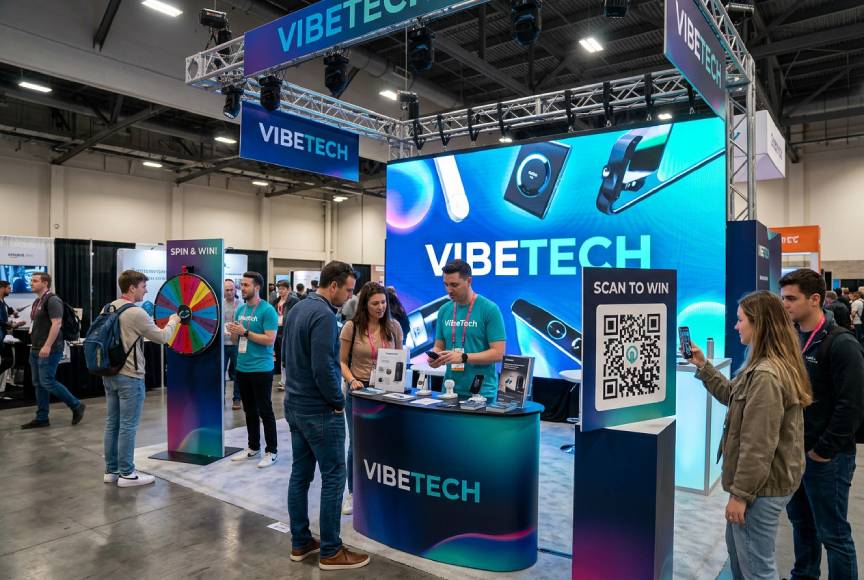
- QR code participation
- Lucky draws
- Limited-time promotions
- Brand ambassador interaction
The concept should not be complicated. If people need too much explanation before joining, they may lose interest.
A good roadshow concept should make people think:
“This looks interesting.”
“I understand what this brand is offering.”
“I know what I need to do next.”
6. Plan the Customer Engagement Flow
Customer flow is often overlooked, but it is one of the most important parts of a roadshow campaign.
A good setup should guide people naturally from attention to action.
For example:
- Customer notices the roadshow setup
- Promoter invites the customer to participate
- Customer tries a product or joins an activity
- Customer learns about the product or campaign
- Customer scans a QR code, fills in a form, or redeems an offer
- Customer receives a sample, gift, voucher, or follow-up message
This flow should feel smooth and natural.
Avoid making customers wait too long, fill in too much information, or listen to a long explanation before they understand the value.
The easier the journey, the higher the chance of participation.
7. Prepare the Right Manpower
Event staff are the human face of your campaign.
Even if the setup looks impressive, the roadshow may not perform well if the manpower is not trained properly.
Depending on the campaign, you may need:
- Brand ambassadors
- Promoters
- Product demonstrators
- Sales representatives
- Event crew
- Emcees
- Technical support
- Logistics crew
- Supervisors
Staff should be briefed on:
- Campaign objective
- Brand message
- Product information
- Customer approach
- Engagement flow
- Promotion details
- Data collection process
- Common customer questions
- Escalation process
- Daily reporting
A professional and confident event team can make customers feel more comfortable engaging with the brand.
8. Make the Setup Visually Clear
A roadshow competes with many distractions. People may be walking, shopping, commuting, or rushing between activities.
Your setup needs to be visually clear from a distance.
Important visual elements include:
- Brand logo
- Campaign headline
- Product visuals
- Clear call-to-action
- Directional signage
- Display materials
- Digital screens
- Lighting
- Branded counters
- Vehicle wrapping, if using mobile event spaces
The setup should quickly answer:
- What is this campaign?
- What is being promoted?
- Why should I stop?
- What should I do next?
Good visuals do not only make the campaign look attractive. They help reduce confusion and increase participation.
9. Include a Clear Call-to-Action
Every roadshow should have a clear next step.
A call-to-action can be simple, but it must be easy to understand.
Examples include:
- Try a free sample
- Scan to redeem
- Sign up today
- Join the game
- Watch the demo
- Take a photo
- Speak to our team
- Get a limited-time offer
- Register your interest
- Follow us on social media
Without a clear call-to-action, customers may engage with the setup but leave without taking any meaningful action.
The CTA should match the campaign objective. If the goal is lead generation, the CTA should guide people to register. If the goal is product trial, the CTA should encourage sampling or demonstration.
10. Use Digital Tools to Improve Engagement
Modern roadshows can go beyond flyers and product displays.
Digital tools can make the campaign more interactive, measurable, and memorable.
Examples include:
- QR code registration
- Interactive touchscreen panels
- Digital games
- Instant surveys
- Photo booths
- LED screens
- Social media challenges
- Digital lucky draws
- Product education videos
- Lead capture forms
- Campaign microsites
Digital engagement tools can help brands collect data, track participation, and extend the customer journey beyond the roadshow itself.
For example, a customer may join a game on-site, scan a QR code, receive a voucher, and later visit the brand’s website or store.
This creates a stronger connection between offline activation and online follow-up.
11. Prepare for Logistics and Site Requirements
Behind every smooth roadshow is detailed logistics planning.
Depending on the campaign, you may need to prepare:
- Setup and dismantling schedule
- Vehicle access, if using mobile event spaces
- Electrical requirements
- AV equipment
- Product stock
- Promotional materials
- Signage
- Storage area
- Staff reporting time
- Safety requirements
- Weather backup plan
- Venue approval
- Crowd control arrangement
These details may not be exciting, but they can make or break the campaign.
For outdoor roadshows, brands should also consider weather conditions, ground surface, shelter, equipment protection, and safety clearance.
Working with an experienced roadshow team helps reduce the chance of last-minute problems.
12. Track Roadshow Performance
A roadshow should not end when the setup is dismantled.
Brands should measure campaign performance to understand whether the roadshow achieved its objective.
Useful performance metrics include:
- Number of customer interactions
- Leads collected
- Samples distributed
- Product demos completed
- QR scans
- Survey responses
- Sales enquiries
- Social media mentions
- Photos taken
- Game participation
- Vouchers redeemed
- Customer feedback
- Daily footfall estimate
The right metrics depend on the campaign goal.
For example, a product sampling campaign may focus on samples distributed and feedback collected. A lead generation campaign may focus on sign-ups and enquiry quality. A brand awareness campaign may focus on reach, interactions, and content engagement.
Measuring results helps brands improve future campaigns.
Common Roadshow Planning Mistakes to Avoid
Even experienced brands can make mistakes when planning roadshows.
Here are some common issues:
- Choosing a location only because it is busy
- Not matching the campaign to the audience
- Using visuals that do not explain the offer clearly
- Having too many steps before customers can participate
- Not training promoters properly
- Forgetting to prepare enough samples or materials
- Making the QR form too long
- Not planning customer queue flow
- Ignoring weather or site restrictions
- Not setting measurable KPIs
- Failing to follow up with leads after the campaign
Avoiding these mistakes can help your roadshow run more smoothly and produce better results.
Common Roadshow Planning Mistakes to Avoid
Even experienced brands can make mistakes when planning roadshows.
Here are some common issues:
- Choosing a location only because it is busy
- Not matching the campaign to the audience
- Using visuals that do not explain the offer clearly
- Having too many steps before customers can participate
- Not training promoters properly
- Forgetting to prepare enough samples or materials
- Making the QR form too long
- Not planning customer queue flow
- Ignoring weather or site restrictions
- Not setting measurable KPIs
- Failing to follow up with leads after the campaign
Avoiding these mistakes can help your roadshow run more smoothly and produce better results.
Why Work with a Roadshow Agency in Singapore?
Planning a roadshow involves many moving parts, including creative concept, location strategy, setup, manpower, logistics, digital engagement, and on-ground execution.
A roadshow agency in Singapore can help brands manage these details more efficiently.
The right agency can support:
- Campaign planning
- Roadshow concept development
- Location and setup planning
- Mobile event space recommendation
- Event truck rental coordination
- Branding and production
- Digital engagement tools
- Staff coordination
- Logistics management
- On-ground execution
- Performance tracking
This allows brands to focus on the campaign message while the agency manages the operational details.
If your campaign involves multiple locations, mobile event trucks, LED trucks, product sampling, or interactive engagement, working with an experienced roadshow partner can make the process much smoother.
How Unicom Marketing Supports Roadshow Campaigns
Unicom Marketing helps brands plan and execute roadshow campaigns, mobile event spaces, brand activations, and event marketing campaigns across Singapore.
Our solutions include mobile event trucks, Kombi vans, LED trucks, LED trailers, event buses, retail entertainment tools, interactive digital devices, product sampling support, and on-ground activation planning.
Whether your brand needs a compact mobile setup, a high-impact LED truck, or a full mobile event space, our team can help create a campaign that attracts attention and engages audiences in real time.
As an experienced event and activation partner, we help brands turn roadshow ideas into practical, engaging, and memorable campaign experiences.
Final Thoughts
A successful roadshow campaign in Singapore requires more than a nice-looking setup. It needs clear objectives, the right audience strategy, suitable location planning, strong visual design, trained manpower, engaging activities, and measurable results.
Roadshows work best when they are planned as full customer experiences, not just temporary event booths.
Whether your brand is planning a product launch, awareness campaign, mobile event truck activation, retail promotion, or customer engagement activity, the right planning process can help your roadshow create stronger impact.
FAQ
How do I plan a roadshow campaign in Singapore?
Start by defining your campaign objective, target audience, location, setup type, engagement activity, manpower, logistics, and performance metrics. A clear plan helps the roadshow run smoothly and deliver better results.
What makes a roadshow campaign successful?
A successful roadshow needs the right location, clear branding, easy customer participation, trained staff, strong visuals, engaging activities, and measurable campaign outcomes.
Should I use a mobile event truck for my roadshow?
A mobile event truck is useful if your campaign needs stronger visibility, more flexibility, or the ability to move across different locations. It can be used as a mobile showroom, product display area, sampling booth, or roadshow platform.
Why should I hire a roadshow agency in Singapore?
A roadshow agency can help manage campaign planning, production, logistics, event staffing, mobile event space selection, on-ground execution, and performance tracking.
What types of brands can use roadshow campaigns?
Roadshow campaigns are suitable for many industries, including FMCG, beauty, property, technology, finance, automotive, education, health, lifestyle, retail, and public awareness campaigns.